Meal Prep for One: 5 Days Without Eating the Same Dinner
By Small Table Kitchen · Updated 2026-11-16
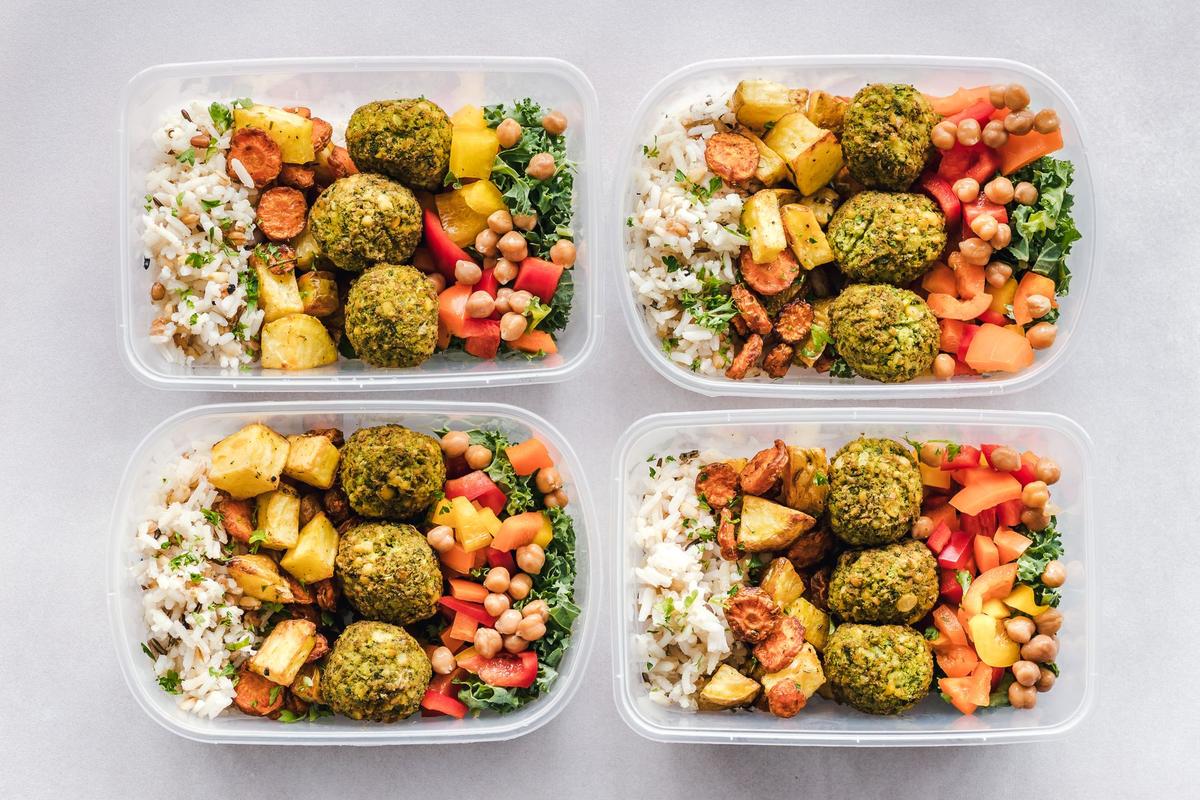
Cooking once and eating the same dish for five days is how many people give up on meal prep by Wednesday. You do not have to prep five identical boxes. This guide shows one Sunday session that makes a frittata, a dip, a tray of muffins and a pan of carrots, then spreads them over five different plates with two freezer dinners to fill the gaps. Every recipe comes from a US government recipe page, scaled for one person, and the storage times come from federal food-safety pages.
The five-day plan
The trick is to prep ingredients and parts of meals, not five finished dinners. Cook the frittata and the hummus on Sunday. Bake the carrots fresh on Wednesday, since they take 25 minutes. Fill the rest of the week from the freezer.
| Day | Plate | Where it comes from |
|---|---|---|
| Monday | Frittata wedge and a muffin | Sunday prep |
| Tuesday | Hummus with raw vegetables | Sunday prep |
| Wednesday | Baked carrots with a yogurt dip | Cooked fresh |
| Thursday | A second frittata wedge | Sunday prep |
| Friday | A frozen single portion | Freezer |
Our guide to freezer meals for one has the Friday plate, and soups for one or two that freeze has more. If a night turns out to be an egg night anyway, breakfast for dinner for one has a few quick ideas.
How we scaled these
Some recipes were published for 6, 8 or 12 servings. For one person we took a half, a third or kept the batch where the extra goes in the freezer. We have not cooked the scaled versions in our own kitchen, so treat the amounts as a careful starting point and check doneness a few minutes early in a small pan.
1. Broccoli-cheddar frittata
The Nutrition.gov broccoli-cheddar frittata recipe is published for 6 servings, with 10 minutes of prep and 25 minutes of cooking. The Nutrition.gov broccoli-cheddar frittata recipe lists 8 eggs, 10 ounces of chopped frozen broccoli and 3 cups of shredded reduced-fat cheddar cheese. We halved it for a smaller pan, which gives 3 wedges for your week.
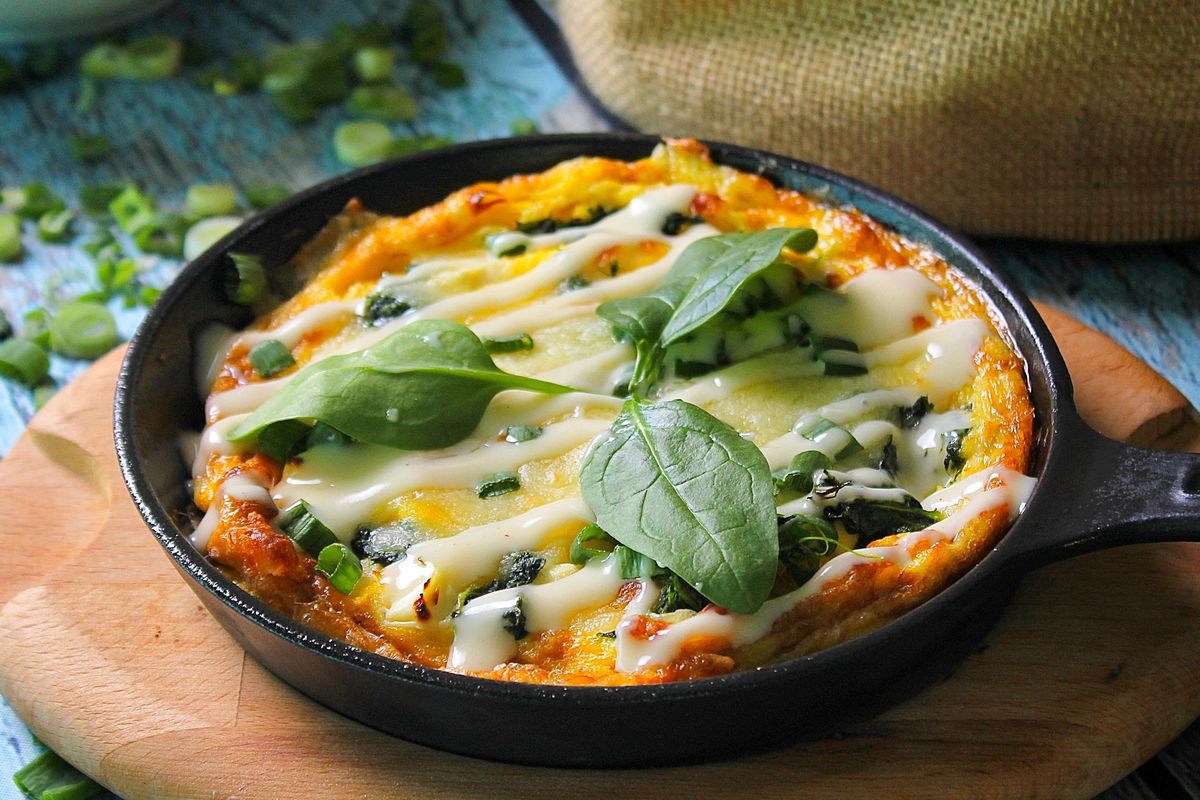
You need (3 wedges): 5 ounces frozen chopped broccoli; 1/2 of a small carrot, diced, optional; a little water for cooking the broccoli; 4 eggs; a splash of nonfat or low-fat milk (the page lists no amount); 1 teaspoon mustard; 1/2 teaspoon seasoned salt; pepper; 1 1/2 cups shredded reduced-fat cheddar; 1 1/2 teaspoons chopped green onion; cooking spray.
- Cook the broccoli and carrot with a little water in a nonstick skillet over medium heat, breaking up the broccoli, until tender. Drain well.
- Beat the eggs, milk, mustard, salt and pepper in a bowl. Stir in the broccoli mixture, cheese and green onion.
- Wipe the skillet, spray it and pour in the egg mixture. Cook over medium heat until the eggs are almost set.
- Take the pan off the heat, cover it and let it stand until no liquid egg is left. Cut into wedges.
The Nutrition.gov broccoli-cheddar frittata recipe has you cook the broccoli in a 10-inch nonstick skillet until tender, about 10 minutes, and drain it well. The Nutrition.gov broccoli-cheddar frittata recipe says to cook the egg mixture until almost set, 8 to 10 minutes, then cover it and let it stand until no visible liquid egg remains, 8 to 10 minutes. The Nutrition.gov broccoli-cheddar frittata recipe suggests three ways to serve a frittata: wedges from the pan, slid topside-up onto a platter, or inverted to show the browned bottom. The FoodSafety.gov safe minimum temperature chart gives 160°F for egg dishes such as frittata and quiche.
2. Hummus for the week
The Nutrition.gov homemade hummus recipe is published for 8 servings, with 20 minutes of prep. The Nutrition.gov homemade hummus recipe lists 2 cups of cooked chickpeas, 2 cloves of garlic, 1/4 cup of lemon juice, 1 tablespoon of tahini and 2 tablespoons of olive oil. We halved it for 4 servings.
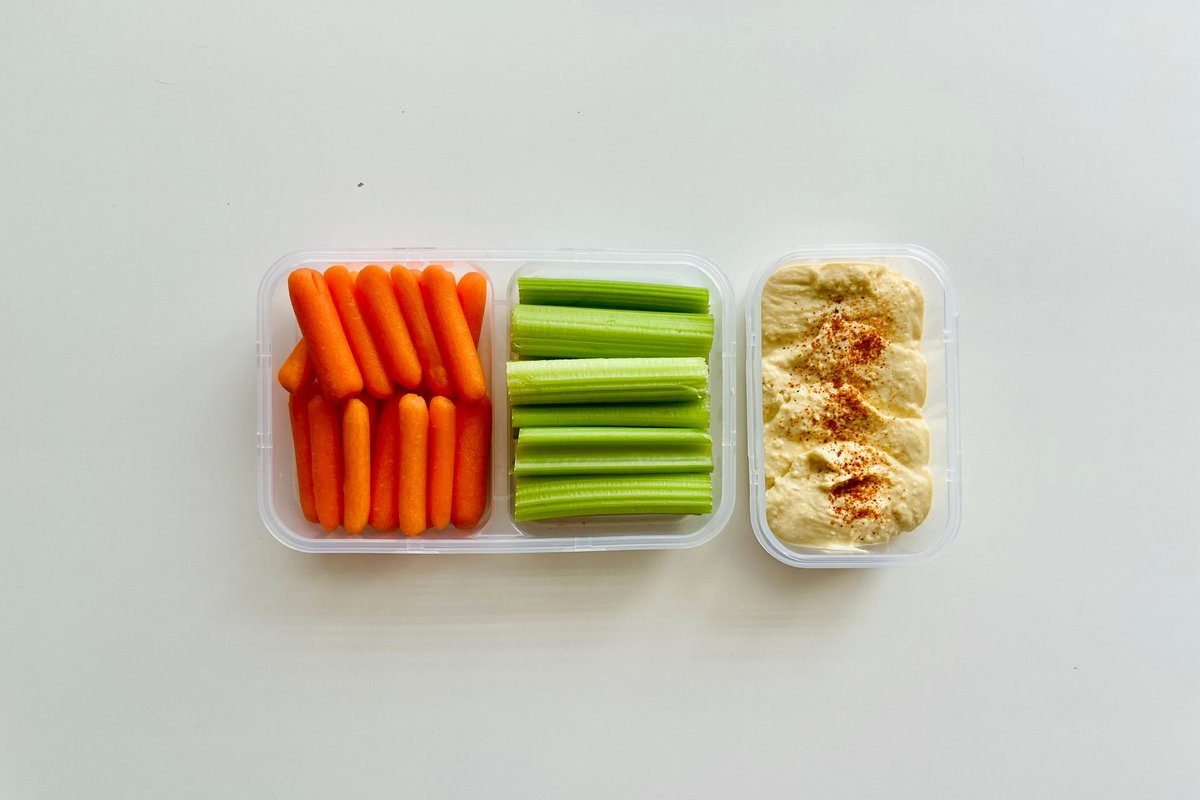
You need (4 servings): 1 cup cooked chickpeas; 1 clove garlic, minced; 2 tablespoons lemon juice; 1 1/2 teaspoons tahini; 1 tablespoon olive oil.
- Mash the chickpeas until smooth. A blender works, with the lemon juice.
- Add the garlic, lemon juice, tahini and oil and mix well.
The Nutrition.gov homemade hummus recipe suggests serving hummus with raw vegetables, on pita bread or a flour tortilla, on crackers, or as a sandwich filling on toasted bread. That is already four different plates from one small bowl.
3. Baked carrots with a yogurt dip
The Nutrition.gov baked carrot fries recipe is published for 6 servings, with 5 minutes of prep and 20 minutes of cooking. The Nutrition.gov baked carrot fries recipe has a serving of 3/4 cup of carrot fries and 1/3 cup of dip. We took one third, for 2 servings, so you have one for Wednesday and one for a snack.
You need (2 servings): 2 cups baby carrots (about 9 ounces); 3/4 teaspoon canola oil; a pinch of salt; 1/2 cup plus 1 tablespoon plain non-fat Greek yogurt; 2 tablespoons sunflower seed butter.
- Heat the oven to 400°F.
- Stir the yogurt and sunflower seed butter together until smooth and keep it cold.
- Toss the carrots with the oil and salt, spread them on a baking sheet in a single layer and bake.
- Serve about 3/4 cup of carrots with a third of a cup of the dip.
The Nutrition.gov baked carrot fries recipe has you bake the carrots at 400°F for 20 minutes, or until lightly brown on the bottom. The Nutrition.gov baked carrot fries recipe says to keep the yogurt and sunflower seed butter dip cold at 40°F or lower. The Nutrition.gov baked carrot fries recipe notes that it contains milk and may contain tree nuts or peanuts.
4. Banana berry muffins, the batch to freeze
Muffins are the one recipe here that we do not cut down. The Nutrition.gov banana berry muffins recipe has a yield of 12. A dozen is the right size to freeze in singles. The Nutrition.gov banana berry muffins recipe lists 2 ripe bananas, 1 egg, 1/4 cup of applesauce and 1/4 cup of blueberries or strawberries.
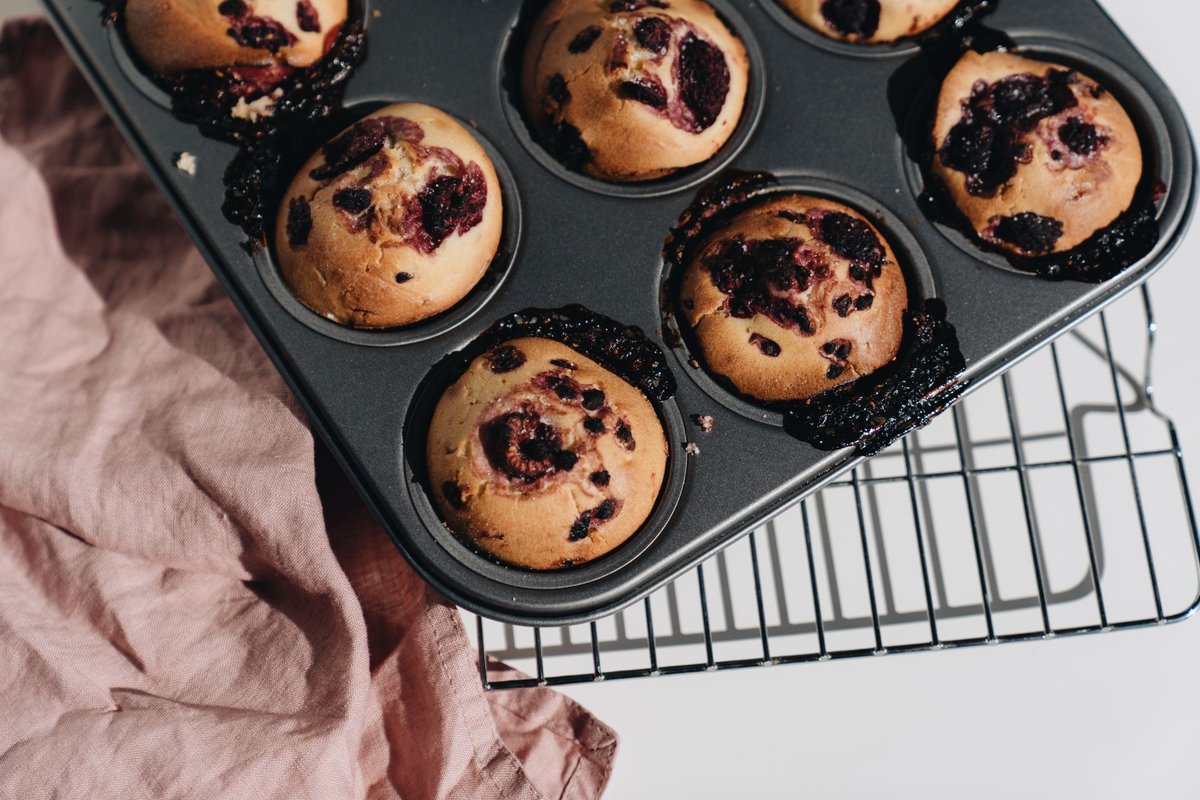
You need (12 muffins): nonstick cooking spray; 1/4 cup applesauce; 1/4 cup sugar; 1 egg; 2 ripe bananas, mashed; 2 tablespoons water; 1/4 cup all-purpose flour; 1/4 cup whole wheat flour; 1/4 cup quick-cooking oats; 1/2 teaspoon baking powder; 1/2 teaspoon baking soda; 1/4 teaspoon salt; 1/4 cup blueberries or strawberries.
- Heat the oven to 350°F and spray a 12-cup muffin pan.
- Stir the applesauce, sugar, egg, bananas and water together in a medium bowl.
- Mix the flours, oats, baking powder, baking soda and salt in a large bowl, then stir in the wet mixture just until moist. Fold in the berries.
- Fill the cups about three-quarters full and bake until lightly brown.
The Nutrition.gov banana berry muffins recipe bakes the muffins at 350°F for 25 to 30 minutes, until lightly brown, and cools them for 10 minutes before removing them from the pan. After that, wrap four for the week and freeze the other eight.
A topper from a pumpkin
If you carved or baked a pumpkin this month, save the seeds. The Nutrition.gov roasted pumpkin seeds recipe is published with a yield of 8, with 5 minutes of prep and 20 minutes of cooking. The Nutrition.gov roasted pumpkin seeds recipe lists 2 tablespoons of olive oil, 1/2 tablespoon of salt and 1/2 tablespoon of garlic powder. The page gives no amount of seeds, so we cannot scale it; use the seasoning as printed with the seeds of one pumpkin. The Nutrition.gov roasted pumpkin seeds recipe bakes the seeds at 350 degrees for 15 to 20 minutes, until golden brown, stirring halfway through. The Nutrition.gov roasted pumpkin seeds recipe says the seeds add crunch as a salad, soup or oatmeal topper.
How long the prep keeps
Frittata has no line of its own in the federal chart, so we use the two nearest ones. The FoodSafety.gov Cold Food Storage Chart lists quiche with filling at 3 to 5 days in the refrigerator and 2 to 3 months in the freezer, after baking. The FoodSafety.gov Cold Food Storage Chart lists casseroles with eggs at 3 to 4 days in the refrigerator and 2 to 3 months in the freezer, after baking. We plan on the shorter 3 to 4 days, which is why Thursday is the last fresh wedge and the rest go in the freezer.
The USDA Leftovers and Food Safety page says leftovers can be kept in the refrigerator for 3 to 4 days or frozen for 3 to 4 months. The FoodSafety.gov safe minimum temperature chart gives 165°F for leftovers of any type. The FoodSafety.gov 4 Steps to Food Safety page says leftovers should be placed in shallow containers and refrigerated promptly to allow quick cooling. The FoodSafety.gov 4 Steps to Food Safety page says never to leave perishable foods out of refrigeration for more than 2 hours.
Common mistakes to avoid
- Prepping five of the same dish. Prep parts, and let each day use them differently.
- Leaving the pan on the stove to cool. Cut the frittata into wedges and pack it within 2 hours.
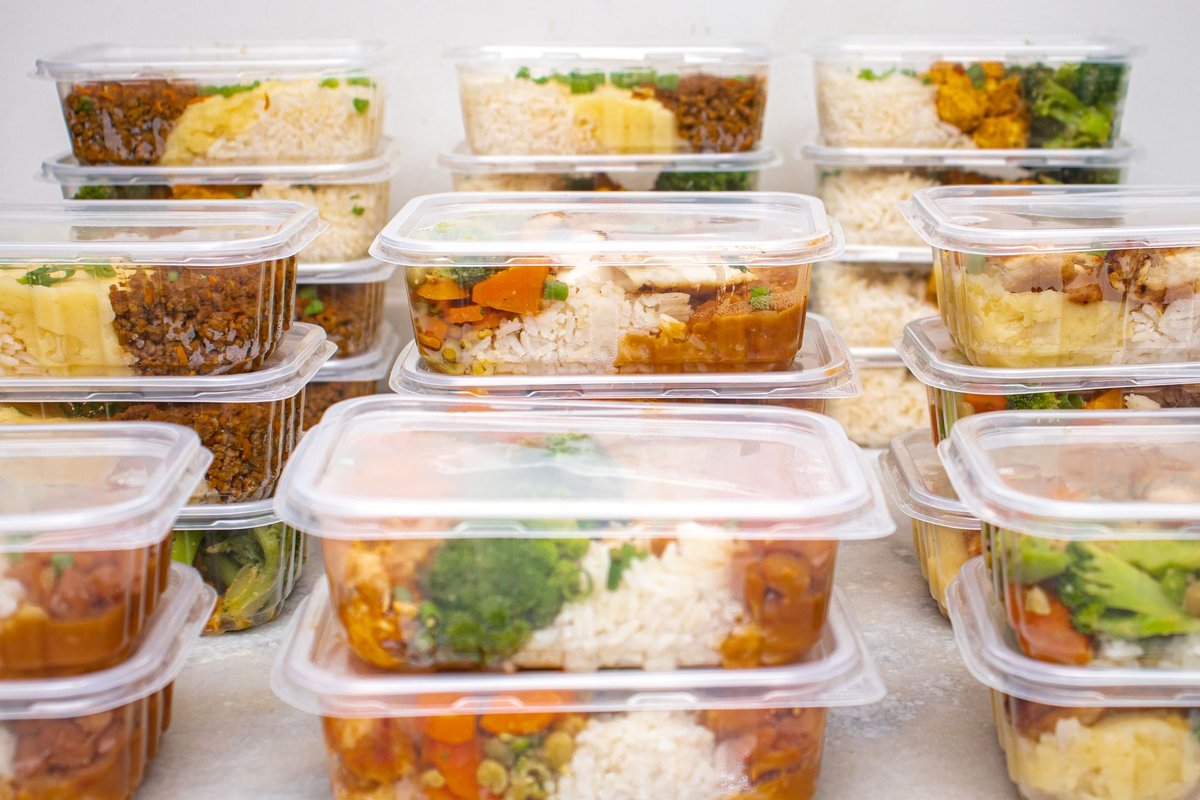
- Packing a hot dish in a deep container. Use shallow ones so it cools fast.
- Skipping the label. Write the cooking day on every container.
Your next step
This Sunday, make only the frittata and the hummus. That is about an hour, and it covers three of the five days. Next week add the muffins. If your week still has holes, our meals for two on a budget plan has more dinners, and our Planning, Freezer and Pantry section has the rest. Check each original recipe and your own dietary needs before you cook; this page is general information, not medical advice.
Sources
- www.nutrition.gov/recipes/broccoli-cheddar-frittata
- www.foodsafety.gov/food-safety-charts/safe-minimum-internal-temperatures
- www.nutrition.gov/recipes/homemade-hummus
- www.nutrition.gov/recipes/baked-carrot-fries-yogurt-sunflower-seed-butter-dip
- www.nutrition.gov/recipes/banana-berry-muffins
- www.nutrition.gov/recipes/roasted-pumpkin-seeds
- www.foodsafety.gov/food-safety-charts/cold-food-storage-charts
- www.fsis.usda.gov/food-safety/safe-food-handling-and-preparation/food-safety-basics/leftovers-and-food-safety
- www.foodsafety.gov/keep-food-safe/4-steps-to-food-safety