How to Cut Any Recipe Down to Two Servings (Cheat Sheet)
By Small Table Kitchen · Updated 2026-11-16
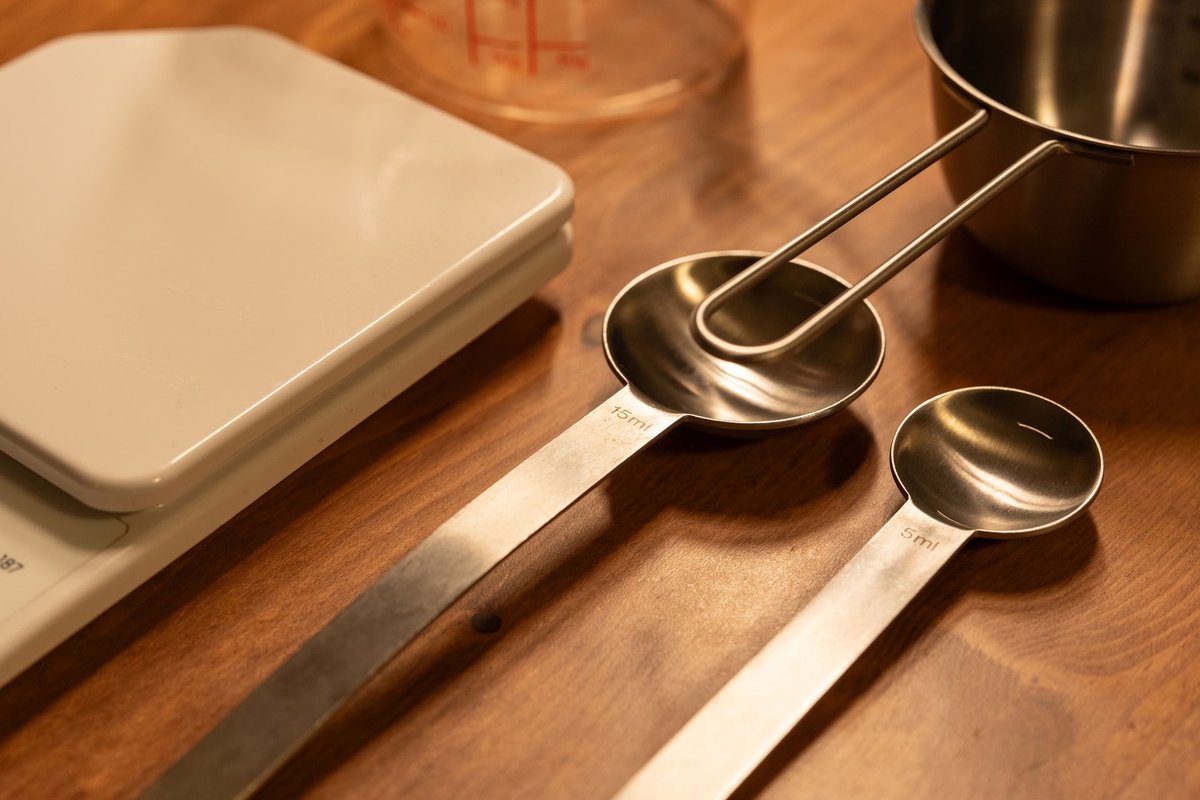
The recipe card says "serves 6", and the people at your table are two. You can cook it all and eat it for a week, or you can cut it down. Cutting a recipe down is mostly arithmetic, and a little judgment about eggs, pinches of spice and the size of the pan. This guide gives you the multipliers, a conversion chart for the awkward fractions, and three worked examples taken from US government recipes, each scaled to two servings with the math on the page.
We have not cooked the scaled versions in our own kitchen. The published amounts and times come from the recipe pages we name, and the scaling is ours. Treat each scaled amount as a careful starting point and taste as you go.
Step 1: find the multiplier
Divide 2 by the number of servings the recipe makes. That is the fraction of every amount you keep.
- Makes 4: use half of everything.
- Makes 6: use a third.
- Makes 8: use a quarter.
- Makes 12: use a sixth, which is small enough that you should round with care.
- Makes 2 or 3: keep it as is. A third serving is tomorrow's lunch.
Write the new amounts in pencil on the recipe page or on a card, so you do the math once. Do not scale in your head while the pan is hot.
Step 2: a chart for the awkward fractions
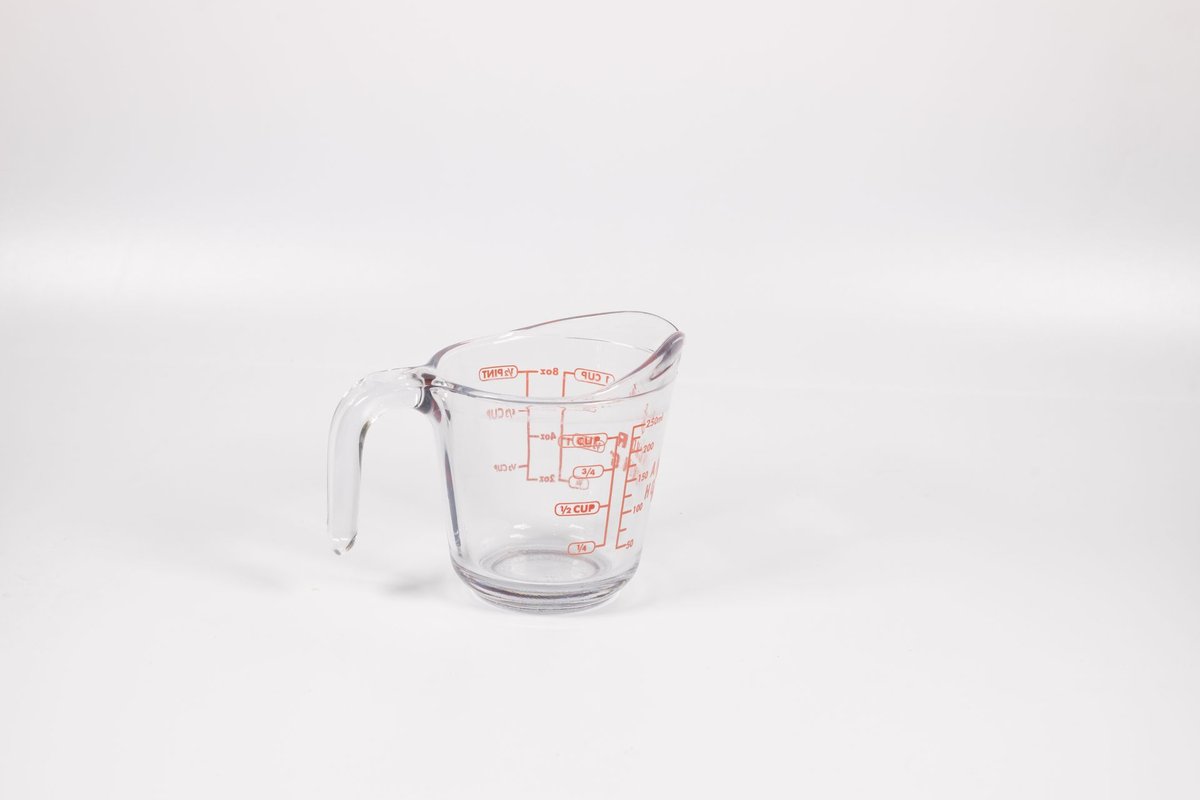
Half of 1 cup is easy. A third of 3/4 cup is not. These conversions use the fact that 1 cup is 16 tablespoons and 1 tablespoon is 3 teaspoons. We rounded to a measure you can really pour.
| Published | Half | Third |
|---|---|---|
| 1 cup | 1/2 cup | 1/3 cup |
| 3/4 cup | 6 tablespoons | 1/4 cup |
| 1/2 cup | 1/4 cup | 2 tablespoons plus 2 teaspoons |
| 1/4 cup | 2 tablespoons | 1 tablespoon plus 1 teaspoon |
| 1 tablespoon | 1 1/2 teaspoons | 1 teaspoon |
| 1 teaspoon | 1/2 teaspoon | 1/3 teaspoon |
| 1/2 teaspoon | 1/4 teaspoon | a bit over 1/8 teaspoon |
| 1/4 teaspoon | 1/8 teaspoon | a pinch |
When a number will not divide
- Eggs. If you need half an egg, beat one egg in a cup and use about half of it. Cook the rest in tomorrow's omelet.
- Spices. Below 1/8 teaspoon, a pinch is the honest measure. Add a little, then taste.
- Whole vegetables. Cut the vegetable into equal parts that match your fraction, use one part and wrap the rest for another meal.
- Cans and packs. Use what the scaled amount asks for and plan a second dinner for the rest, instead of rounding up to the whole can.
Step 3: keep the temperatures, watch the clock
Oven temperatures and safe internal temperatures do not shrink with the recipe. A small amount can still be undercooked. A small dish can also finish sooner, so check early.
- Keep the cooking times of the original, then check doneness a few minutes before they end.
- Use a smaller pan or dish. The same small amount spread across a big pan dries out or burns.
- Use a food thermometer. The FoodSafety.gov 4 Steps to Food Safety page says to use a food thermometer to be sure your food is safe and to place it in the thickest part of the food.
- The FoodSafety.gov safe minimum temperature chart gives 160°F for egg dishes such as frittata and quiche.
Worked example 1: curried chicken wraps, 6 down to 2
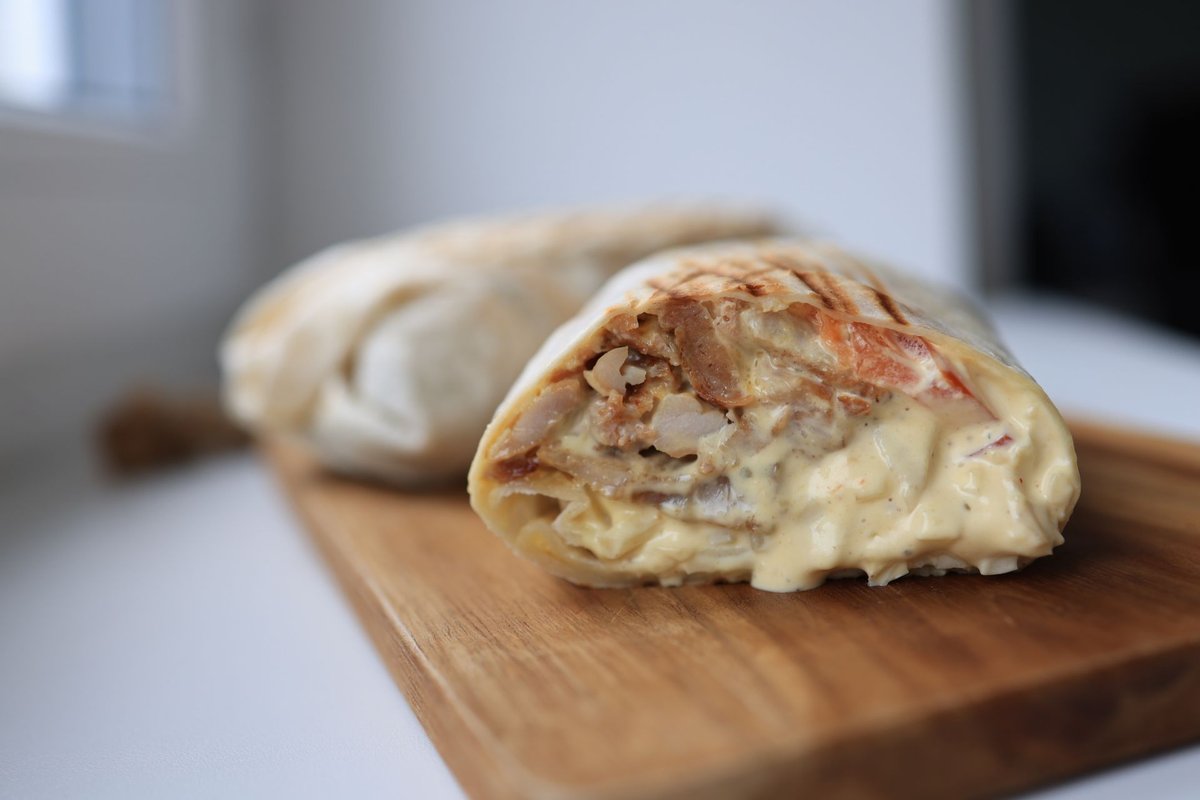
The Nutrition.gov curried chicken wraps recipe is published for 6 servings, with 15 minutes of prep. It needs no cooking if you start with cooked chicken, so it is a good first recipe to cut down. A third of 6 is 2, so you make 2 wraps.
Published amounts (6 servings): 1/2 cup plain nonfat Greek yogurt; 1/2 teaspoon curry powder; 1 1/2 cups diced cooked chicken; 1 3/4 cups diced apples; 3/4 cup golden raisins; 6 whole-wheat tortillas, 8 inches.
For 2 servings (one third): 2 tablespoons plus 2 teaspoons Greek yogurt; a bit over 1/8 teaspoon curry powder; 1/2 cup diced cooked chicken; about 1/2 cup plus 1 tablespoon diced apple (7/12 of a cup, rounded); 1/4 cup golden raisins; 2 whole-wheat tortillas.
- Stir the yogurt and curry powder together until smooth.
- Fold in the chicken, apple and raisins.
- Put about 1/2 cup of the filling in the center of each tortilla, fold in the sides and roll up.
- Set the wraps seam side down and cut each in half.
The Nutrition.gov curried chicken wraps recipe puts 1/2 cup of the chicken salad in the center of each tortilla, rolls it up and cuts it in half. The Nutrition.gov curried chicken wraps recipe says that if you prepare it in advance, you should store the chicken salad in an airtight container at 40°F or lower until you are ready to assemble the wraps. The FoodSafety.gov Cold Food Storage Chart lists 3 to 4 days in the refrigerator for chicken, egg, ham, tuna and macaroni salads, and says they do not freeze well.
Worked example 2: eggs over kale and sweet potato grits, 4 down to 2
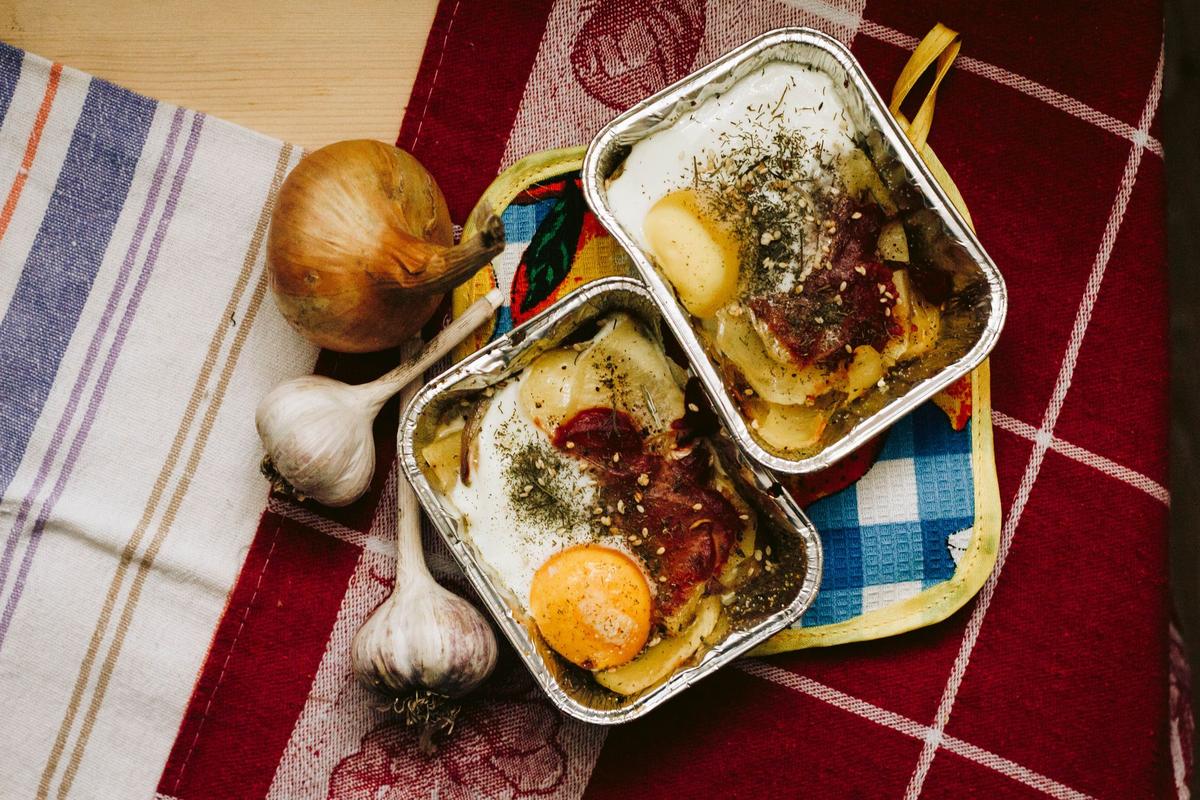
The Nutrition.gov eggs over kale and sweet potato grits recipe is published for 4 servings, with a cook time of 45 minutes. Half of it is a good case, because it makes you cut a sweet potato and divide oil between a pan and a dish.
Published amounts (4 servings): 1 large sweet potato; 2 cups chopped kale; 1 tablespoon vegetable oil, divided; 1 1/2 cups water; 1 cup nonfat milk; 3/4 cup quick grits; 1/4 teaspoon salt; 4 large eggs.
For 2 servings (half): half a large sweet potato (or 1 small one); 1 cup chopped kale; 1 1/2 teaspoons vegetable oil, divided into 1/2 teaspoon for the two dishes and 1 teaspoon for the kale; 3/4 cup water; 1/2 cup nonfat milk; 6 tablespoons quick grits; 1/8 teaspoon salt; 2 large eggs.
- Heat the oven to 350°F and coat two small baking dishes with the 1/2 teaspoon of oil.
- Pierce the sweet potato a few times and microwave it until just soft. Peel it and mash or puree it.
- Cook the kale in the remaining oil for about 5 minutes.
- Boil the water and milk, stir in the grits and sweet potato, and cook for 5 minutes. Take it off the heat and stir in the kale.
- Divide the mixture between the dishes, make a hollow in each and break an egg into it.
- Bake uncovered for 30 minutes, until the eggs are cooked. Let them cool for about 10 minutes before you serve.
The Nutrition.gov eggs over kale and sweet potato grits recipe bakes the dishes uncovered at 350°F for 30 minutes, until the eggs are cooked. The Nutrition.gov eggs over kale and sweet potato grits recipe has you let the dishes cool for 10 minutes before serving. The other half of the sweet potato can go into the next day's soup or a baked side.
Worked example 3: tomato and cucumber salad, 12 down to 2
The Nutrition.gov tomato and cucumber salad recipe is published for 12 servings. This is the hardest cut, a sixth, so the numbers get small and rounding does most of the work.
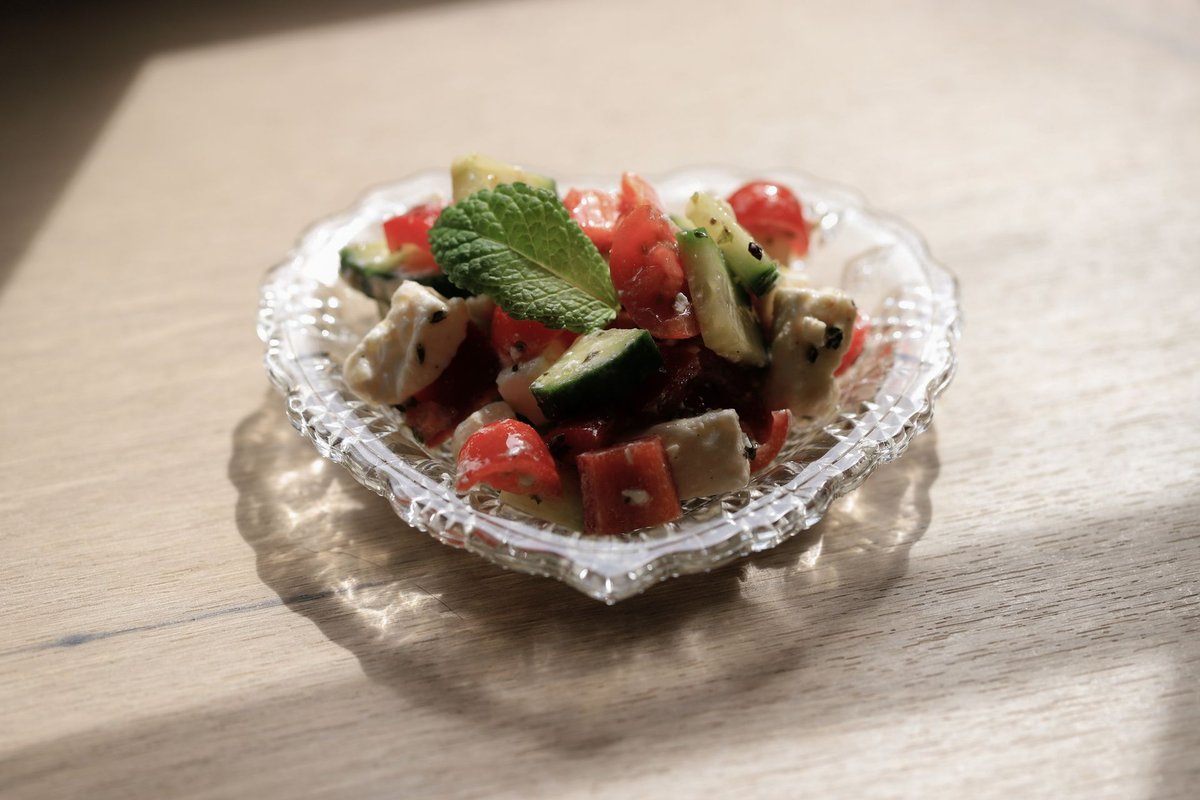
Published amounts (12 servings): 4 large tomatoes, cubed; 1 large cucumber, chopped; 1 cup chopped red onion; 1 cup chopped green pepper; 1/3 cup chopped parsley. Dressing: 1/3 cup apple cider vinegar; 1 tablespoon olive oil; 2 cloves garlic, minced; 1/2 teaspoon each of salt and black pepper; 1/2 teaspoon sugar.
For 2 servings (one sixth, rounded): 1 medium tomato; one sixth of a large cucumber (cut it into six equal pieces and use one); 2 tablespoons plus 2 teaspoons chopped red onion; the same of green pepper; 1 tablespoon chopped parsley. Dressing: 1 tablespoon cider vinegar; 1/2 teaspoon olive oil; 1/3 of a garlic clove, or a very small clove; a pinch each of salt, pepper and sugar.
- Combine the tomato, cucumber, onion, pepper and parsley in a bowl.
- Stir the dressing ingredients together in a small bowl and pour over the salad.
- Mix well and refrigerate before serving.
The Nutrition.gov tomato and cucumber salad recipe has you refrigerate the salad for at least 1 hour before serving. The FoodSafety.gov 4 Steps to Food Safety page says to scrub firm produce like melons or cucumbers with a clean produce brush.
What to do with the rest
When a recipe is cut to two, the leftover half-vegetable, half-can and extra egg are the new waste. Our guide on what to do with half a can and other extras gives ideas, and our meals for two on a budget plan shows four more recipes cut down the same way. If a recipe is worth keeping at its full size, freeze it in single portions with our freezer meals for one guide, and for dinners already written for two start with easy dinners for two.
Common mistakes to avoid
- Cutting the ingredients and keeping the big pan. Use a smaller pan or dish.
- Cutting the cooking time by the same fraction. Keep the original time and check early.
- Rounding every amount up. A little extra of each ingredient adds up to a different recipe.
- Forgetting the salt and spices. They scale too, even if the numbers look tiny.
- Scaling a recipe you have never made without tasting. Taste and adjust at the end.
Your next step
Pick one recipe from your own binder that serves 4 or 6. Divide 2 by its servings, write the new amounts on a card and clip the card to the recipe. Next time you cook it, you do no math at the stove. For more help with planning a small kitchen, see Planning, Freezer and Pantry. Check each original recipe and your own dietary needs before you cook; this page is general information, not medical advice.
Sources
- www.foodsafety.gov/keep-food-safe/4-steps-to-food-safety
- www.foodsafety.gov/food-safety-charts/safe-minimum-internal-temperatures
- www.nutrition.gov/recipes/curried-chicken-wraps
- www.foodsafety.gov/food-safety-charts/cold-food-storage-charts
- www.nutrition.gov/recipes/eggs-over-kale-and-sweet-potato-grits
- www.nutrition.gov/recipes/tomato-and-cucumber-salad