Cooking for One: A Pantry List for a Small Kitchen
By Small Table Kitchen · Updated 2026-11-16
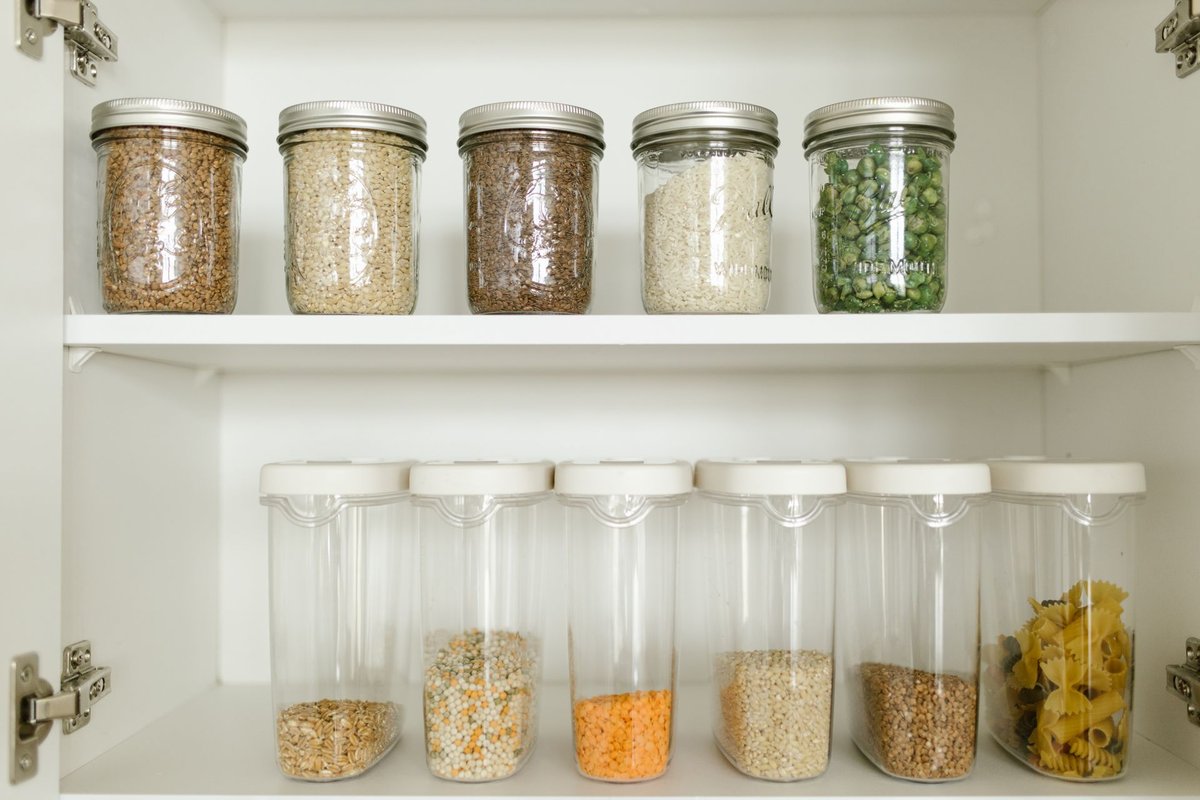
Most pantries were stocked for a family of five: the big bag of rice, the case of canned tomatoes, the shelf of things bought for a crowd that no longer comes to dinner. If you cook for one, you need a different shelf. It should be small enough to see at a glance, built from foods that keep, and sorted so that the half can of beans and the last of the pasta get used before they turn into a problem. This guide gives a pantry list for one, a freezer and refrigerator list, and the storage times from the federal pages we name.
A small pantry works better than a full one
A pantry for one has two jobs. It has to let you make a decent dinner on a night when you did not shop, and it has to rotate, so that nothing sits for years. Both jobs are easier with fewer items and smaller sizes. Aim for about a dozen shelf items you really use and let the rest of the shelf stay empty.
The USDA Food Safety and Inspection Service Shelf-Stable Food Safety page lists canned and bottled foods, rice, pasta, flour, sugar, spices and oils among the shelf-stable foods that can be stored at room temperature. That list is the backbone of the shopping list below.
Where to keep it
The USDA Food Safety and Inspection Service Shelf-Stable Food Safety page says to store canned foods and other shelf-stable products in a cool, dry place, and never above or beside the stove, under the sink, or in a damp garage or basement. The USDA Food Safety and Inspection Service Shelf-Stable Food Safety page also says that temperatures below 85°F are best. In a small kitchen that usually means one cupboard away from the stove, not the shelf above it.
The USDA Food Safety and Inspection Service Shelf-Stable Food Safety page says to check your pantry every few weeks and use the canned goods you have had on hand for a while. Put a reminder on the calendar, such as the first Sunday of the month, and move the oldest cans to the front.
The shelf list for one
This is a list of kinds of food, not brands or sizes. Buy the smallest package that fits the way you cook.
- Canned beans: black beans, white beans and chickpeas. They turn into soup, quesadillas, salads and shakshuka.
- Canned tomatoes or tomato sauce: the base for soups, eggs and pasta.
- Canned or pouch fish or chicken: for a sandwich or a salad when there is no fresh protein.
- Canned vegetables and fruit: corn, carrots, peas, peaches and pears. Low-sodium and no-salt-added versions let you control the salt.
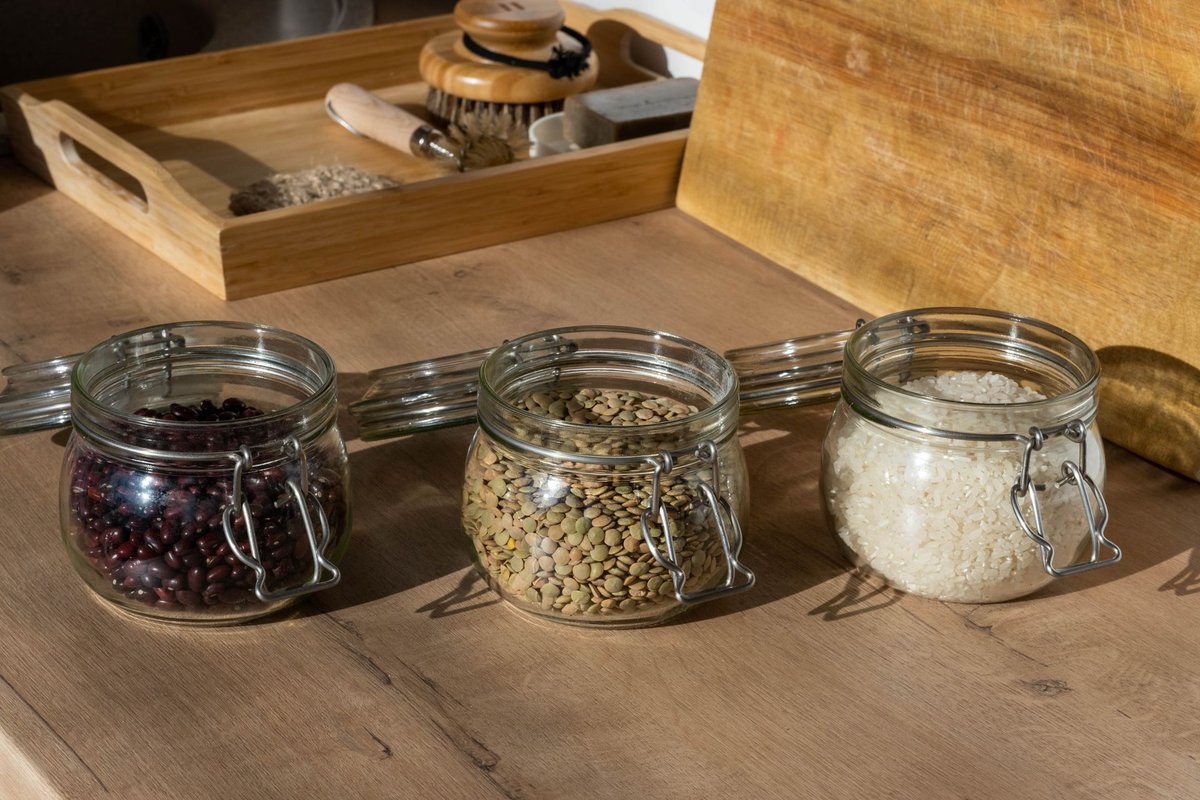
- Rice and dried pasta: small packages, stored in a closed container.
- Rolled oats: breakfast, and a base for baking mixes.
- Broth in a box or can: low-sodium when you can find it.
- Oil, vinegar, salt, pepper and two or three spices: garlic powder, Italian seasoning and paprika cover many dinners.
- Peanut butter or another nut butter, and a jar of salsa: two foods that make a quick lunch or a quick sauce.
How long shelf foods keep
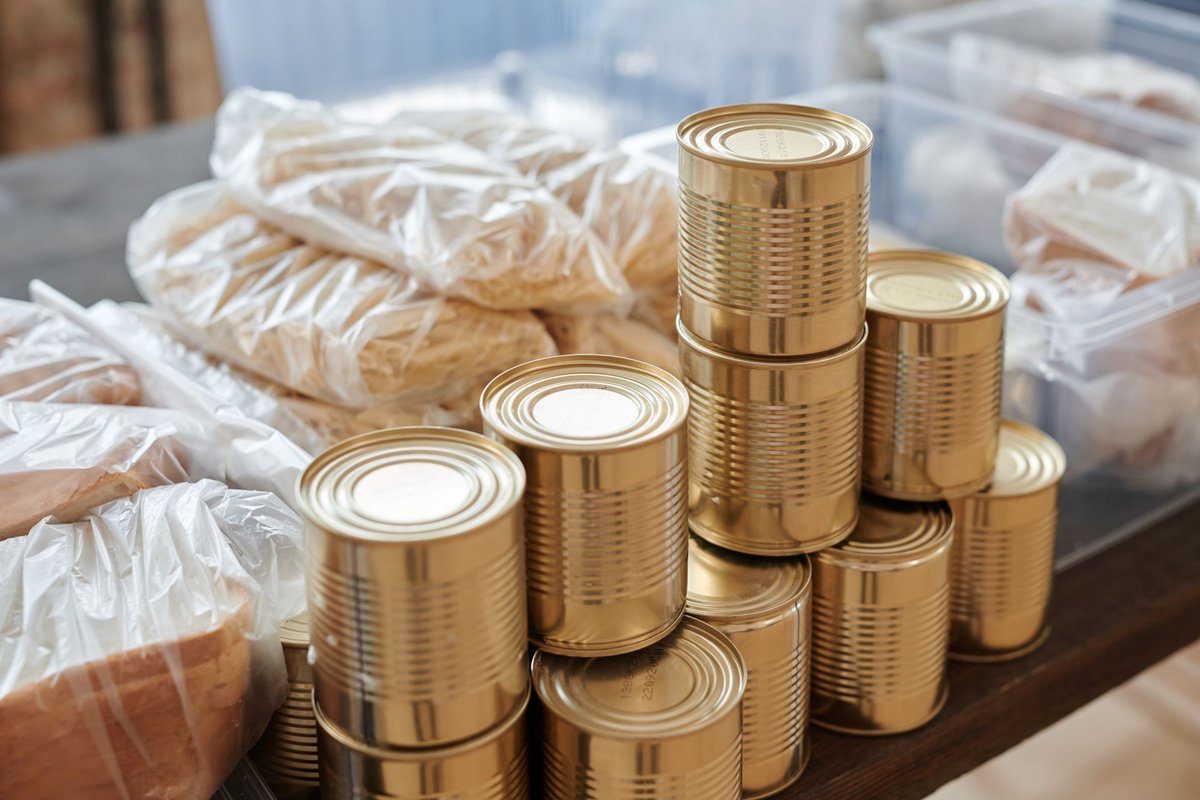
The USDA Food Safety and Inspection Service Shelf-Stable Food Safety page has a storage chart for shelf-stable foods. It gives a time on the shelf and a time after opening, and the table below copies the rows that matter for a small kitchen.
| Food | On the shelf | After opening |
|---|---|---|
| Low-acid canned goods (beans, corn, carrots, peas, soups) | 2 to 5 years | 3 to 4 days in the refrigerator |
| High-acid canned goods (tomatoes, peaches, pears, pineapple) | 12 to 18 months | 5 to 7 days in the refrigerator |
| Rice and dried pasta | 2 years | After cooking, 3 to 4 days in the refrigerator |
The USDA Food Safety and Inspection Service Shelf-Stable Food Safety chart gives 2 to 5 years on the shelf and 3 to 4 days in the refrigerator after opening for low-acid canned goods such as beans, corn, carrots, peas and soups other than tomato. The USDA Food Safety and Inspection Service Shelf-Stable Food Safety chart gives 12 to 18 months on the shelf and 5 to 7 days in the refrigerator after opening for high-acid canned goods such as tomatoes, peaches, pears and pineapple. The USDA Food Safety and Inspection Service Shelf-Stable Food Safety chart gives 2 years on the shelf for rice and dried pasta, and 3 to 4 days in the refrigerator after cooking.
After you open a can
You will rarely use a whole can. The USDA Food Safety and Inspection Service Shelf-Stable Food Safety page says unused portions of canned food may be refrigerated in the can, but that a glass or plastic storage container keeps the best quality and flavor. Put the rest of the beans in a small container with a lid, write the date on a piece of tape, and use them within the days the table gives. Our guide on what to do with half a can and other extras has recipes for exactly this.
Which cans to leave at the store
The USDA Food Safety and Inspection Service Shelf-Stable Food Safety page says not to purchase bulging, rusted, leaking or deeply dented cans. The USDA Food Safety and Inspection Service Shelf-Stable Food Safety page also says some canned foods, such as some canned ham and seafood, are labeled "Keep Refrigerated" and are not safe at room temperature. Read the label before you put one in the pantry.
Dates, labels and a mix you make yourself
The USDA Food Safety and Inspection Service Shelf-Stable Food Safety page says product dating is not required by federal regulations, except for infant formula and some baby food, and that dating is for quality, not safety. So a date on a can is a hint about quality. It is not a deadline, and the condition of the can matters more.
The same idea applies to anything you put in a jar. The Nutrition.gov easy-as-a-mix pizza recipe says to store its baking mix in a closed, covered can, rigid plastic container or sealed heavy plastic bag, to label and date the container, and to use the mix within 6 months. A label with the date you filled the jar is the cheapest tool a small pantry has.
The freezer list for one
A freezer is a second pantry, and for one person it is the better one. It holds what you cannot finish. The USDA Food Safety and Inspection Service Freezing and Food Safety page says foods stored constantly at 0°F will always be safe, and that only quality suffers with lengthy freezer storage. Keep these on hand:
- Frozen vegetables in a bag you can pour from, so you can cook a handful.
- Frozen fruit for oats, yogurt and smoothies.
- Single portions of cooked dinners and soups. Our freezer meals for one guide shows how to freeze them safely.
- Bread, kept in the freezer a few slices at a time.
The refrigerator list for one
Keep the refrigerator list short too: eggs, a small block of cheese, milk or yogurt, onions or carrots and one fresh green vegetable. The FoodSafety.gov Cold Food Storage Chart gives 3 to 5 weeks in the refrigerator for raw eggs in the shell. That makes eggs a patient fresh protein for a small kitchen. Eggs, a can of white beans and a can of tomato sauce make dinner in the shakshuka in our easy dinners for two guide.
Common mistakes to avoid
- Buying the big can because the small one costs more per ounce. A can you cannot finish is not a saving.
- Storing cans above the stove, where the heat is. Choose a cool, dry cupboard.
- Leaving an open can in the cupboard. Move the rest to a covered container and refrigerate it.
- Buying for meals you do not eat. Stock the dinners you already cook.
- Skipping the monthly check. Rotate the oldest cans to the front.
Your next step
Open one cupboard and take out everything you have not touched in a month. Keep what you will really use, give away what you will not, and write the keepers on a list of ten. That list is your pantry. For a plan that uses it, see healthy meals for one on a budget, and the whole set of storage guides is in Planning, Freezer and Pantry. This page is general information, not medical advice.
Sources
- www.fsis.usda.gov/food-safety/safe-food-handling-and-preparation/food-safety-basics/shelf-stable-food
- www.nutrition.gov/recipes/easy-mix-pizza
- www.fsis.usda.gov/food-safety/safe-food-handling-and-preparation/food-safety-basics/freezing-and-food-safety
- www.foodsafety.gov/food-safety-charts/cold-food-storage-charts