Meals for Two on a Budget: A Week of Dinners With No Waste
By Small Table Kitchen · Updated 2026-11-16
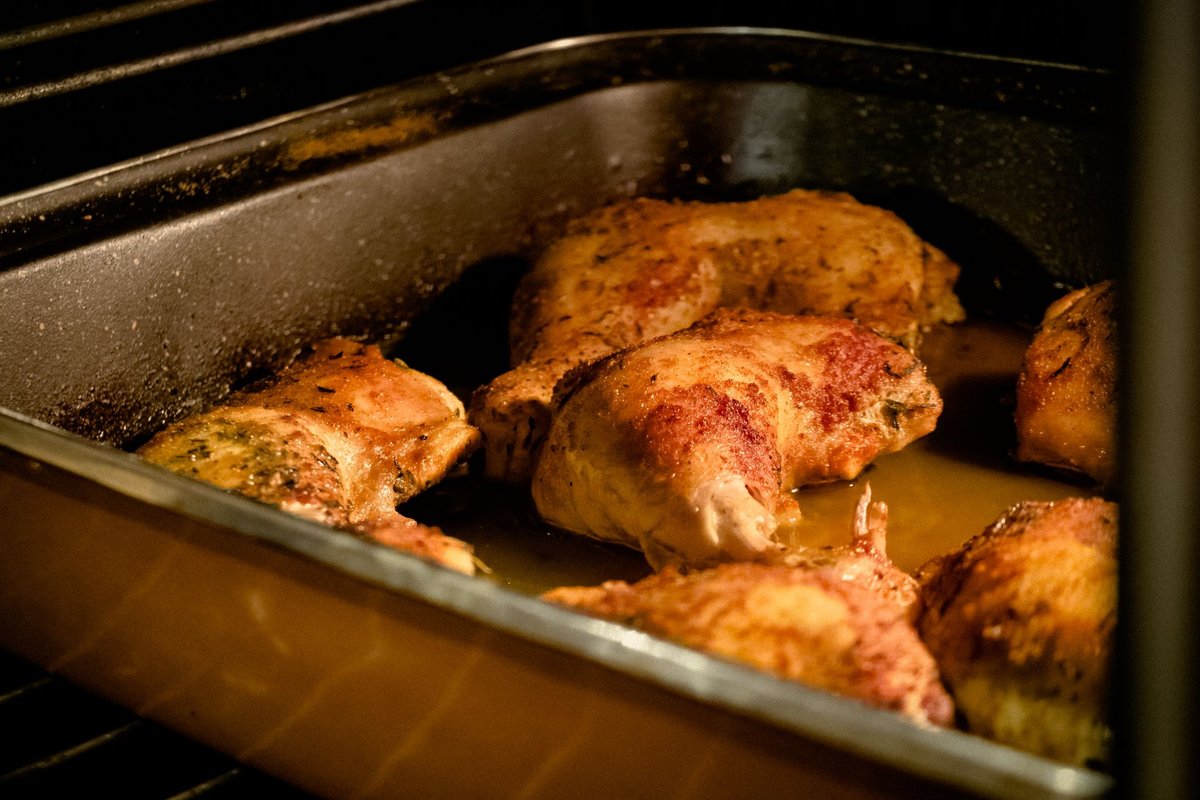
Most grocery packs are built for four to six people, and a head of cabbage, a pack of chicken thighs or a bag of flour can spoil before two people finish it. That is where a small household loses money: not on the price of one item, but on the half you throw away. This guide gives you a week of dinners for two built from four US government recipes and one shopping idea: buy once, use the same ingredient twice, and freeze or plan for the rest. Each recipe is scaled down, and we show the arithmetic.
We have not cooked the scaled versions ourselves. Amounts come from the recipe pages we name, our scaling is shown, and storage times come from a federal food-safety chart. There are no prices in this guide, because they differ from one store and one month to another. The savings come from waste you avoid.
The budget idea: use every ingredient twice
A budget plan for two is a shopping plan before it is a recipe plan. Before you buy, check that every fresh item appears in at least two dinners.
- Cabbage appears in the teriyaki chicken dinner and in a simple cabbage side.
- Cheese and flour become a pizza that is half the size of the published recipe.
- Chicken thighs come in a pack. Cook three and freeze the rest in portions, which we cover below.
- Zucchini is the only item in the plan you may need to buy as a single piece.
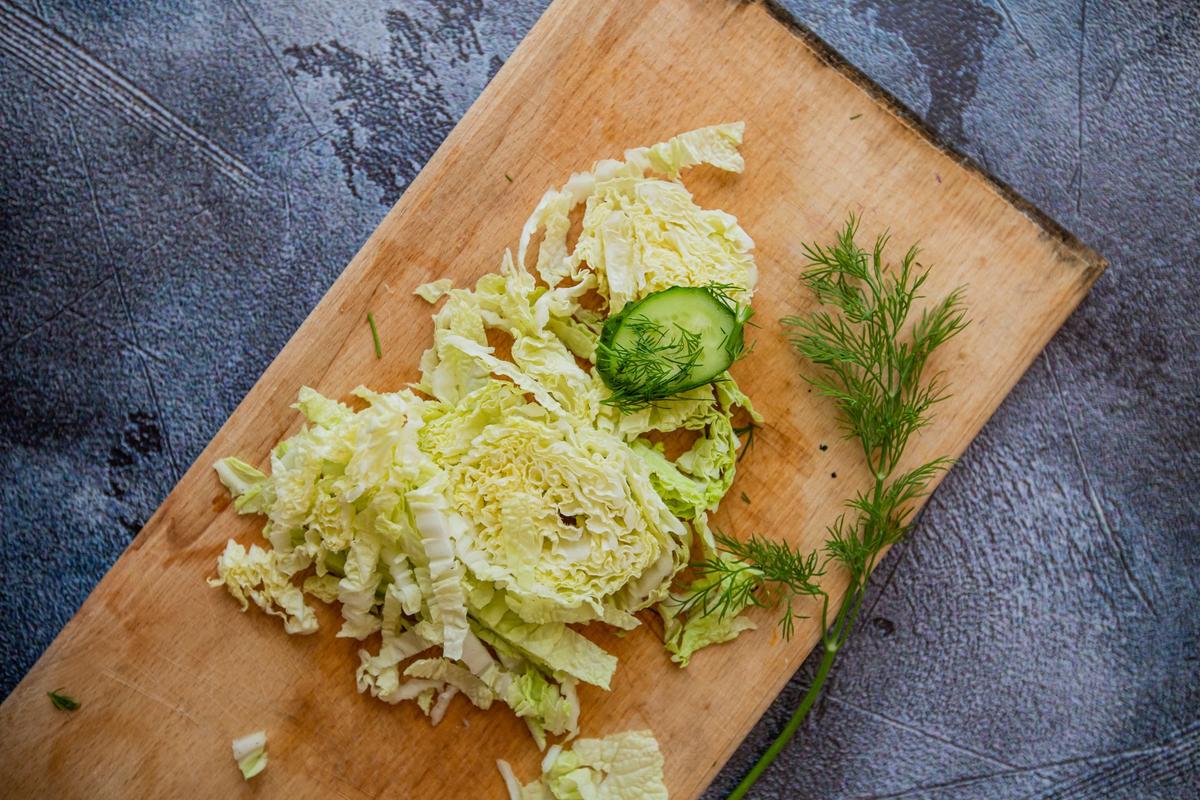
1. Teriyaki chicken and cabbage, cut to two
The Nutrition.gov teriyaki chicken and cabbage recipe is published for 6 servings and lists 4 hours 20 minutes of prep and 25 minutes of cooking. Most of that is marinating time, which means you start it in the morning and do almost nothing at dinner. We took one third, which is 3 chicken thighs for 2 plates.
You need (2 servings, one third of the published amounts): 2 teaspoons reduced-sodium soy sauce; 1/2 teaspoon vegetable oil; a pinch each of ground black pepper, garlic powder and ground ginger; 3 boneless, skinless chicken thighs (about 8 ounces); 1 cup plus 2 tablespoons shredded cabbage.
The published amounts are 2 tablespoons soy sauce, 1 1/2 teaspoons oil, 1/8 teaspoon each of pepper, garlic powder and ginger, about 9 chicken thighs (25 1/4 ounces) and 3 1/3 cups shredded cabbage. The spices are so small that a pinch is the honest measure.
- Whisk the soy sauce, oil and spices in a small bowl. Pour half into the bottom of a small baking dish and keep the other half in the refrigerator.
- Add the chicken, cover and marinate in the refrigerator for 2 hours. Turn the chicken, cover and marinate 2 hours more.
- Heat the oven to 400°F and spread the cabbage in a clean baking dish.
- Lift the chicken out of the marinade and throw that marinade away. Set the chicken on the cabbage and pour the reserved marinade over it.
- Bake for 25 minutes, until a thermometer in the thickest part reads 165°F.
The Nutrition.gov teriyaki chicken and cabbage recipe marinates the chicken in the refrigerator at 40°F or lower for 2 hours, flips it, and marinates it 2 more hours. The Nutrition.gov teriyaki chicken and cabbage recipe bakes the chicken on a bed of shredded cabbage at 400°F for 25 minutes. The Nutrition.gov teriyaki chicken and cabbage recipe says to heat the chicken to an internal temperature of 165°F or higher for at least 15 seconds. The Nutrition.gov teriyaki chicken and cabbage recipe says the chicken can be marinated overnight in the refrigerator, and that the marinade should not be reused. The Nutrition.gov teriyaki chicken and cabbage recipe serves each person 1 1/2 chicken thighs with 1/4 cup of cooked cabbage.
The FoodSafety.gov 4 Steps to Food Safety page says the safest way to thaw or marinate meat, poultry and seafood is in the refrigerator, and never on the counter. The FoodSafety.gov safe minimum temperature chart gives 165°F for all chicken, including thighs.
What to do with the rest of the pack
Chicken thighs are sold in packs of six or more. The FoodSafety.gov Cold Food Storage Chart lists 1 to 2 days in the refrigerator for fresh chicken or turkey pieces, and 9 months in the freezer. So cook three thighs for dinner, put the others in freezer bags of three each on the day you buy them, and label the date. For the packing and thawing steps, see our guide to freezer meals for one.
2. Pizza for two, from scratch
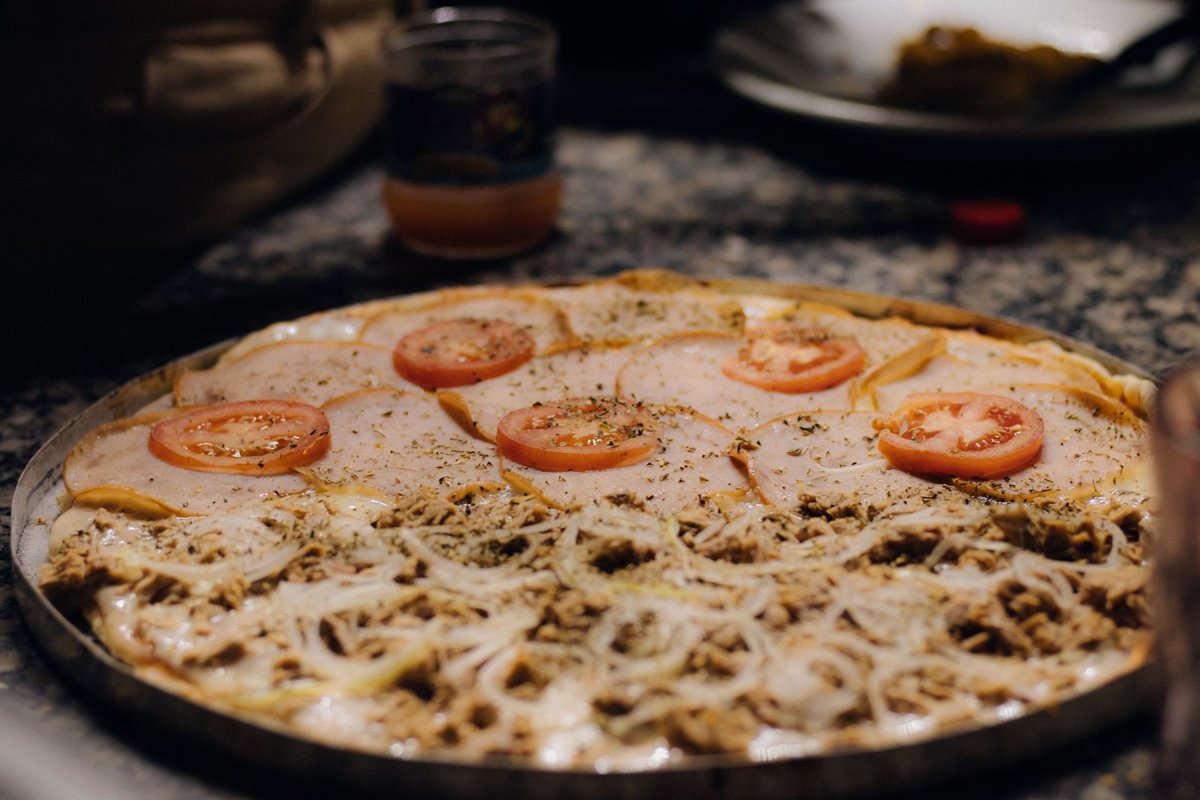
A homemade pizza uses flour, yeast, a small jar of sauce and a bag of cheese, so it is a way to use ingredients you may already own. The Nutrition.gov quick and easy pizza recipe is published for 4 servings, with 30 minutes of prep and 15 minutes of cooking. We halved it.
You need (2 servings, half of the published amounts): 1 cup all-purpose flour, divided in half; 1 1/2 teaspoons instant yeast; 1 1/2 teaspoons sugar; 1/3 cup plus 1 tablespoon warm water (110 to 115°F); nonstick cooking spray; 1/2 cup marinara sauce; 3 ounces shredded part-skim mozzarella.
- Heat the oven to 375°F.
- Mix 1/2 cup of the flour with the yeast, sugar and warm water. Stir in the rest of the flour little by little until the dough forms a ball.
- Knead the dough on a floured surface for about 5 minutes.
- Put the dough in a sprayed bowl, cover it with a clean dishtowel and let it rest for 10 to 15 minutes on top of the warming oven, not over a lit burner.
- Press the dough onto a sprayed baking sheet. A smaller sheet gives a thicker crust.
- Spread a thin layer of sauce, leaving 1/2 inch of bare crust, and add the cheese and any toppings. Do not overload it or it turns soggy.
- Bake about 15 minutes, until the crust is brown and the cheese melts.
The Nutrition.gov quick and easy pizza recipe heats the oven to 375°F, lets the dough rise for 10 to 15 minutes and bakes the pizza for approximately 15 minutes. The FoodSafety.gov Cold Food Storage Chart lists 3 to 4 days in the refrigerator and 1 to 2 months in the freezer for leftover pizza.
3. Cabbage comfort, as a side or a light dinner
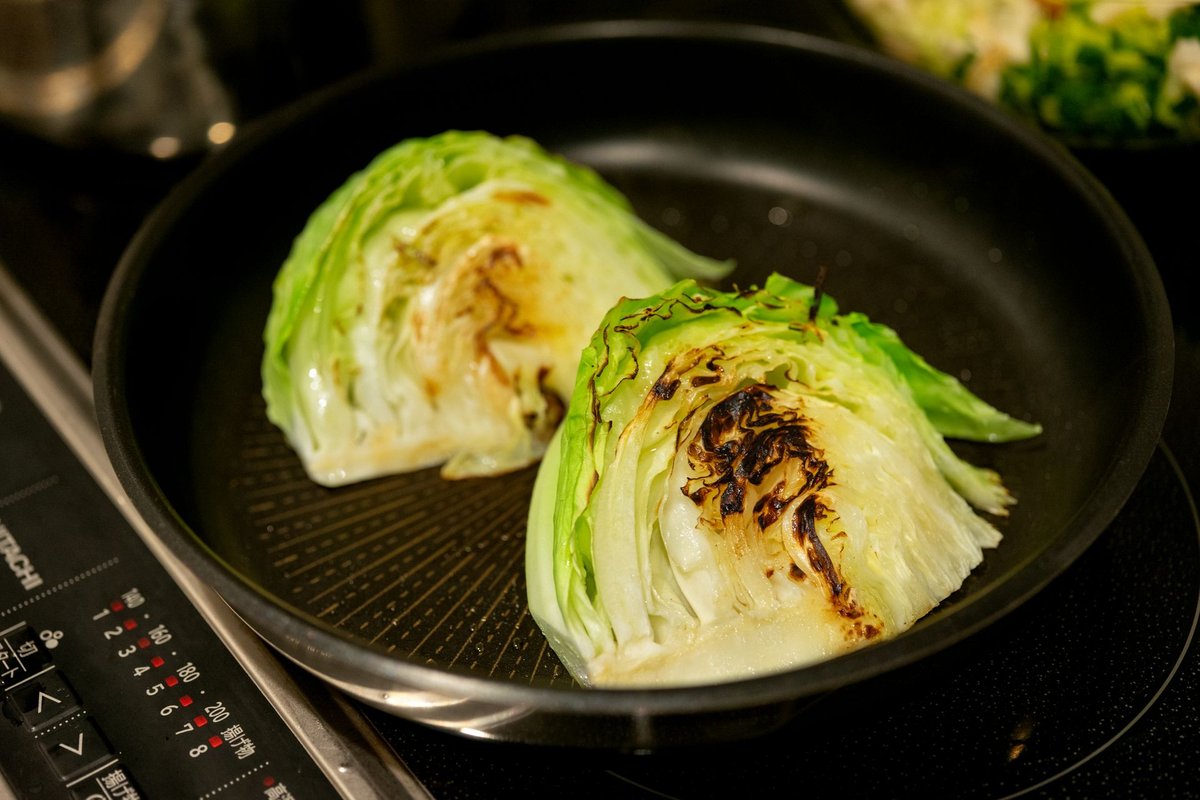
This is the recipe that uses the rest of the cabbage. The Nutrition.gov cabbage comfort recipe is published for 4 servings, with 5 minutes of prep and 35 minutes of cooking. The Nutrition.gov cabbage comfort recipe describes it as a simple and inexpensive side dish. We halved it.
You need (2 servings, half of the published amounts): 1/2 onion, sliced; 1/2 teaspoon vegetable oil; 2 1/4 cups sliced cabbage; 1/8 teaspoon salt; 1/8 teaspoon black pepper; 1/2 teaspoon caraway seeds.
- Heat the oil in a large sauté pan and cook the onion over medium heat until light brown.
- Add the cabbage, salt, pepper and caraway.
- Stir and cook for 30 minutes, then serve.
The Nutrition.gov cabbage comfort recipe sautés the onion for about 5 to 6 minutes, then cooks the cabbage for 30 minutes.
4. Shredded zucchini and pasta, a third
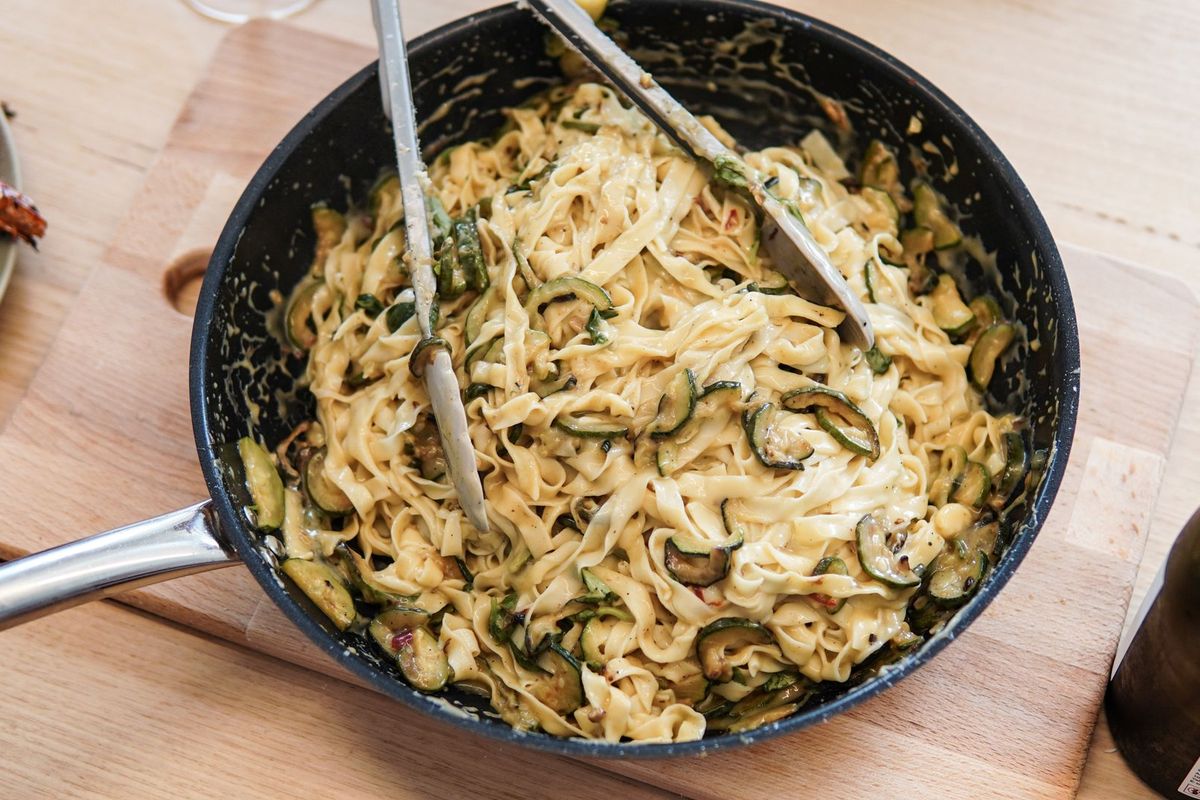
The Nutrition.gov shredded zucchini and pasta recipe is published for 6 servings, with 20 minutes of prep and 20 minutes of cooking. The Nutrition.gov shredded zucchini and pasta recipe serves 2/3 cup per person. For two plates that is a bit over a cup of finished pasta. A third of the recipe gives 2 servings, but the amounts are awkward, so round them as shown.
You need (2 servings, one third of the published amounts): about 6 1/2 tablespoons whole-wheat bow-tie pasta, uncooked; 1 cup water for boiling; about 1/3 teaspoon vegetable oil (a light coat); 1/2 teaspoon minced garlic; 1 cup plus 3 tablespoons shredded zucchini; a pinch each of salt and pepper; 1/2 teaspoon grated Parmesan.
The published amounts are 1 1/4 cups pasta, 3 cups water, 1 teaspoon oil, 1 1/2 teaspoons garlic, 3 1/2 cups zucchini, 1/4 teaspoon salt, 1/8 teaspoon pepper and 2 teaspoons Parmesan.
- Boil the pasta in the water for 8 minutes, drain and rinse it with cold water.
- Heat the oil in a small nonstick pan, add the garlic and stir for 15 to 20 seconds.
- Add the zucchini, salt and pepper, turn the heat up to medium-high and cook 10 minutes, stirring often.
- Stir in the pasta and cook about 2 minutes more. Top with the Parmesan.
The Nutrition.gov shredded zucchini and pasta recipe cooks the pasta for 8 minutes until it is al dente, and heats the finished dish to 140°F or higher. Wash the zucchini before shredding it. The FoodSafety.gov 4 Steps to Food Safety page says to rinse fruits and vegetables under running water without soap, bleach or commercial produce washes.
A week of dinners for two
| Night | Dinner | Shopping note |
|---|---|---|
| 1 | Teriyaki chicken and cabbage | Freeze the other thighs in 3s |
| 2 | Pizza for two | Half of the published recipe |
| 3 | Cabbage comfort with toast | Uses the rest of the cabbage |
| 4 | Zucchini pasta | The only fresh item to buy once |
| 5 | Leftover pizza or pasta | Inside the 3 to 4 day window |
| 6 | Teriyaki chicken from the freezer | Thaw in the refrigerator |
| 7 | Your own pantry night | Eggs, toast, soup |
If you want a plan for the week of dinners for two with an oven and a sheet pan, our easy dinners for two guide has one. For stocking the shelves behind this plan, see the pantry list for a small kitchen.
Common mistakes to avoid
- Buying a whole bag of anything you will use once. Check that each fresh item has a second dinner.
- Marinating on the counter. Use the refrigerator.
- Reusing the marinade. The recipe says to discard what the raw chicken sat in.
- Leaving leftover pizza in the box on the counter. Refrigerate it within 2 hours.
- Scaling by eye when the numbers are awkward. A pinch of spice is fine, but keep the flour, water and yeast in the right proportion.
Your next step
Write the shopping list from this week's plan before you go to the store: one head of cabbage, a pack of chicken thighs you will split, flour, yeast, cheese and a zucchini. Check each original recipe and your own dietary needs before you cook; this page is general information, not medical advice. More plans for a small kitchen live in Planning, Freezer and Pantry.
Sources
- www.nutrition.gov/recipes/teriyaki-chicken-and-cabbage
- www.foodsafety.gov/keep-food-safe/4-steps-to-food-safety
- www.foodsafety.gov/food-safety-charts/safe-minimum-internal-temperatures
- www.foodsafety.gov/food-safety-charts/cold-food-storage-charts
- www.nutrition.gov/recipes/quick-and-easy-pizza
- www.nutrition.gov/recipes/cabbage-comfort
- www.nutrition.gov/recipes/shredded-zucchini-and-pasta