Eggs for Dinner for One: Safe Cooking and Storage
By Small Table Kitchen · Updated 2026-11-16

Some evenings the only dinner you want is the one you would eat at breakfast: eggs, toast, something warm on one plate. Cooking for yourself after a long day does not need a sauce and three pans. Eggs come in a carton that keeps for weeks, they cook in minutes and they are already sized for one. This guide gathers the egg dinners on this site in one place, adds the egg safety rules that matter when you eat eggs at night, and shows how to keep the extras without waste.
Every egg recipe on this site comes from a US government recipe page and lives in the guide linked beside it, so we do not repeat the recipes here. What this page adds is the part around the recipe: how to buy and keep eggs for one, how to tell an egg dish is done, how long cooked eggs keep and a plan for the week. We have not cooked these dishes ourselves, and the photos show similar dishes.
Eggs for dinner: the safety rules in short
Eggs are a raw food until they are cooked. The USDA Food Safety and Inspection Service shell eggs page says eggs are perishable, just like raw meat, poultry and fish. The USDA Food Safety and Inspection Service shell eggs page says that to be safe, eggs must be safely handled, promptly refrigerated and thoroughly cooked.
Thoroughly cooked has numbers behind it. The FoodSafety.gov safe minimum temperature chart says to cook raw eggs until the yolk and white are firm, and it gives 160°F for egg dishes such as frittata and quiche. The USDA Food Safety and Inspection Service doneness page says to cook egg dishes until a food thermometer shows 160°F.
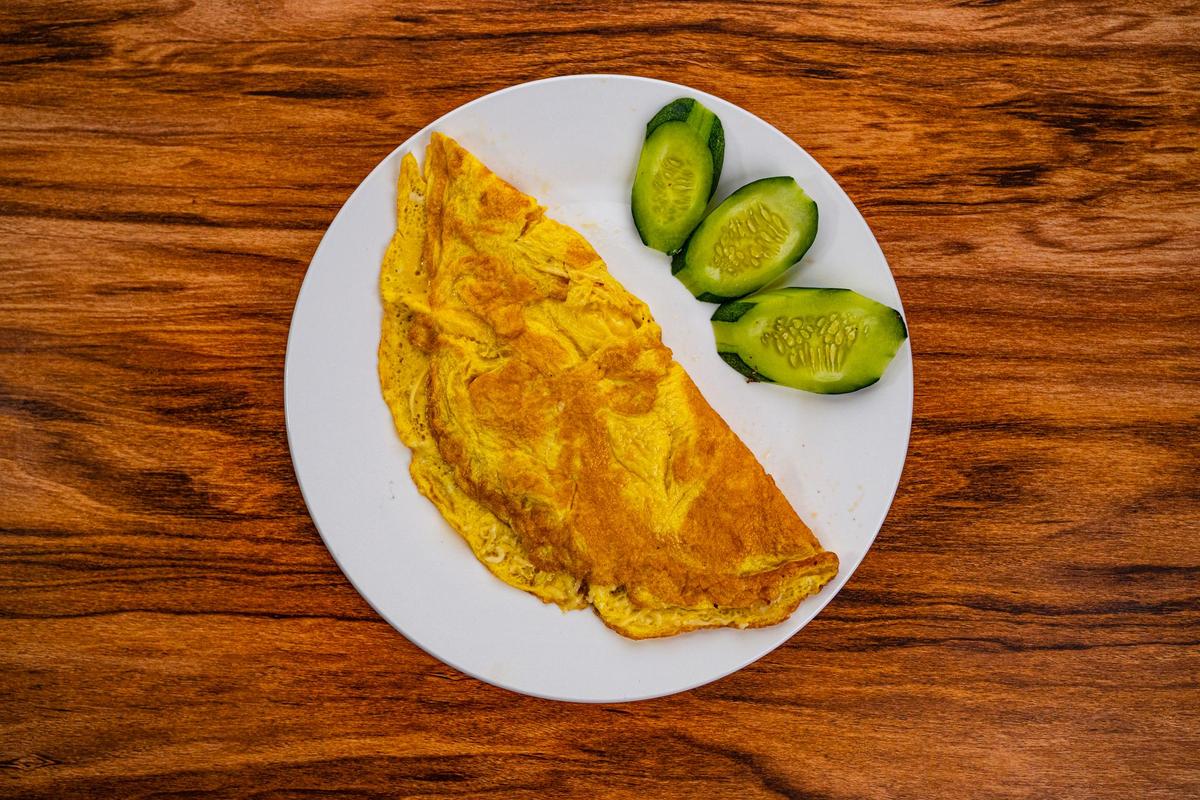
The egg dinners on this site
Each of these is a government recipe that we have already cut to a small table. Pick by how tired you are.
- Almost no work: the veggie omelet in a mug and the Eagle Nest plate, both in easy dinner for one.
- Eggs and beans in one bowl: the white bean and egg shakshuka, in 5 easy dinners for two. It is a single serving, so it suits one person well.
- Eggs as a side or a snack: the avocado deviled eggs in easy recipes for seniors, made from just two eggs.
- Breakfast food for the freezer: tofu breakfast burritos and blueberry oatmeal pancakes in freezer meals for one, so a breakfast dinner can come straight from the freezer.
- A wedge for tonight and tomorrow: the broccoli and cheddar frittata in meal prep for one.
Buy and keep eggs for one
One carton can last a person living alone for a long time, so keep it where it stays cold and steady. The FoodSafety.gov 4 Steps to Food Safety page says to keep eggs in their original carton and to store them in the main compartment of the refrigerator, not in the door. The FoodSafety.gov 4 Steps to Food Safety page also says not to wash eggs, to avoid spreading harmful germs around your kitchen.
Wash your hands after cracking eggs, not just before. The FoodSafety.gov 4 Steps to Food Safety page lists handling raw meat, poultry, seafood or uncooked eggs among the key times to wash your hands.

How long eggs and egg dishes keep
The table has the times we use when we plan a week of egg dinners. The refrigerator times are for safety; the freezer times are for quality.
| Food | Refrigerator | Freezer |
|---|---|---|
| Raw eggs in the shell | 3 to 5 weeks | Do not freeze in the shell |
| Hard-cooked eggs | 1 week | Do not freeze |
| Casseroles with eggs, after baking | 3 to 4 days | 2 to 3 months |
| Raw egg whites and yolks | 2 to 4 days | 12 months |
The FoodSafety.gov Cold Food Storage Chart gives 3 to 5 weeks in the refrigerator for raw eggs in the shell, and says not to freeze them in the shell. The FoodSafety.gov Cold Food Storage Chart gives 1 week in the refrigerator for hard-cooked eggs, and says not to freeze them. The FoodSafety.gov Cold Food Storage Chart gives 3 to 4 days in the refrigerator after baking, and 2 to 3 months in the freezer, for casseroles with eggs. The FoodSafety.gov Cold Food Storage Chart gives 2 to 4 days in the refrigerator and 12 months in the freezer for raw egg whites and yolks, and notes that yolks do not freeze well.
If you only need part of an egg, the chart has a way out. The FoodSafety.gov Cold Food Storage Chart says to beat the yolks and whites together and then freeze them. So a beaten egg you did not use does not have to go in the trash.

A week of breakfast dinners for one
Here is one way to spread the five dinners above across a week. It uses one carton of eggs and one grocery trip.
- Monday: veggie omelet in a mug, with toast.
- Tuesday: white bean and egg shakshuka, one serving.
- Wednesday: frittata wedge. Eat one, refrigerate the rest in a covered container.
- Thursday: a second frittata wedge, reheated, or tofu breakfast burritos from the freezer.
- Friday: Eagle Nest plate, or avocado deviled eggs with toast.
Anything cooked on Wednesday has to be finished or frozen within the 3 to 4 days in the table. The FoodSafety.gov 4 Steps to Food Safety page says to refrigerate perishable foods within 2 hours, or within 1 hour if the food is exposed to temperatures above 90°F.
Common mistakes to avoid
- Serving eggs that are still runny when the recipe says to cook them until firm.
- Skipping the thermometer on a frittata or other baked egg dish. It takes a few seconds to check for 160°F.
- Keeping the carton in the refrigerator door, where the temperature changes every time it opens.
- Freezing hard-cooked eggs. The chart says not to.
- Leaving a cooked egg dish on the counter while you finish a show. Put the extra in the refrigerator within 2 hours.
Your next step
Check the date on the eggs you have, then pick one dinner from the list above for tonight. If you want something sweeter on a tired evening, the small batch cookies and brownies guide covers treats, and Dinners for One or Two has more quick dinners. Check each original recipe and your own dietary needs before you cook; this page is general information, not medical advice.
Sources
- www.fsis.usda.gov/food-safety/safe-food-handling-and-preparation/eggs/shell-eggs-farm-table
- www.foodsafety.gov/food-safety-charts/safe-minimum-internal-temperatures
- www.fsis.usda.gov/food-safety/safe-food-handling-and-preparation/food-safety-basics/doneness-versus-safety
- www.foodsafety.gov/keep-food-safe/4-steps-to-food-safety
- www.foodsafety.gov/food-safety-charts/cold-food-storage-charts