Heart Healthy Recipes for Two People Over 55
By Small Table Kitchen · Updated 2026-11-16
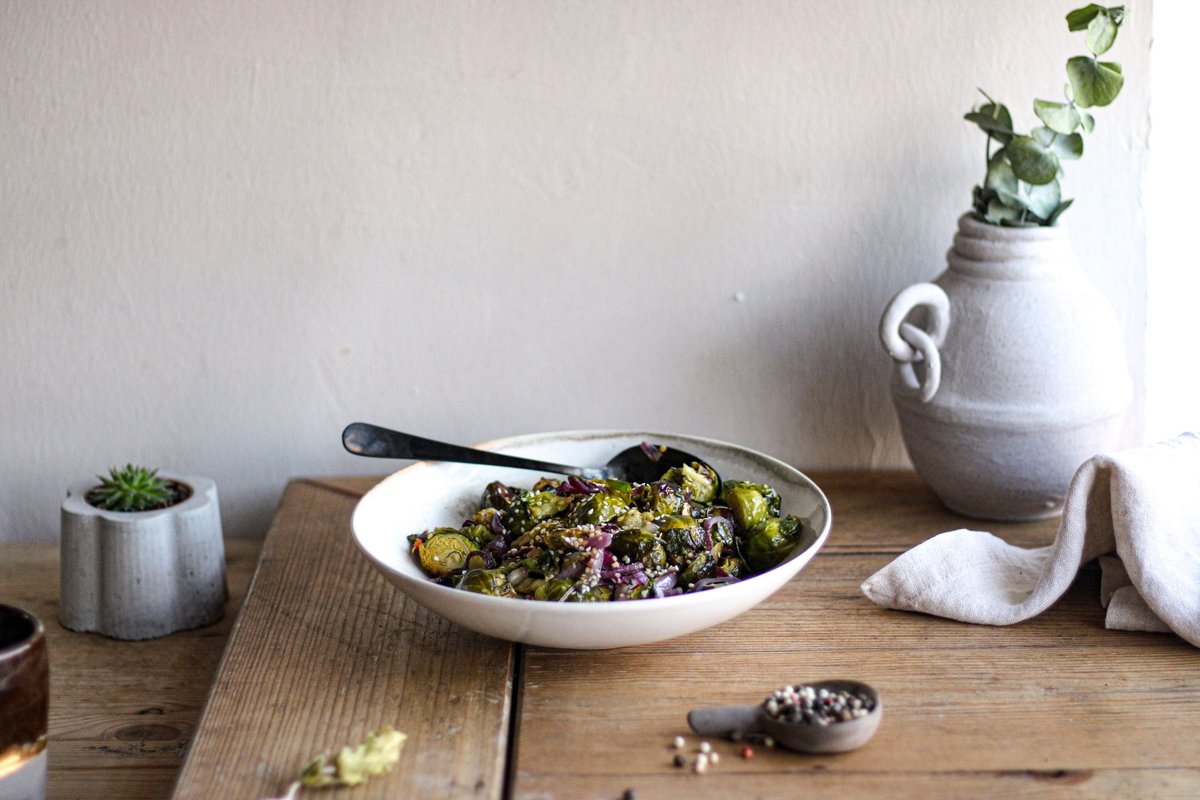
If your doctor or dietitian has asked you to change how you cook, two plates can still feel like a big project. Most heart-healthy recipes are written for a family, and the long ingredient lists make it hard to see what is actually in the pot. This guide takes four recipes from US government recipe pages and shows what each one lists, such as the oil, the salt and the soy sauce, scaled to two servings. We make no health promises of our own. We describe the recipes and point to the sources.
What this page does and does not do
We are a cooking site, not a medical one. We do not say that any dish lowers, fixes or prevents anything. What we can do is report each recipe's own ingredient list, so you can compare it with the plan your doctor or dietitian gave you. Where a recipe was published for 4 or 6 servings, we cut it down and show the arithmetic. We have not cooked the scaled versions in our own kitchen, so use the amounts as a careful starting point.
- Read each original recipe page before you cook, and compare it with your own plan.
- Use a food thermometer where a recipe gives a safe temperature.
- Keep the cooking times of the original, and check doneness a few minutes early in a small pan.
What each recipe lists, side by side
The table shows the oil and salt each recipe lists as published, and how many servings that amount was written for.
| Recipe | Oil and salt listed | Servings |
|---|---|---|
| Roasted Brussels sprouts | 1 tbsp oil, 1/8 tsp salt | 6 |
| Cauliflower rice | 1 tbsp oil, 1/2 tsp salt | 4 |
| Baked tofu bites | Spray only; reduced-sodium soy sauce | 6 |
| 5 A Day Salad | None; nonfat or low-fat dressing | 4 |
1. Roasted Brussels sprouts
The Nutrition.gov roasted Brussels sprouts recipe is published for 6 servings, with 5 minutes of prep and 20 minutes of cooking. We took one third, which gives 2 servings.
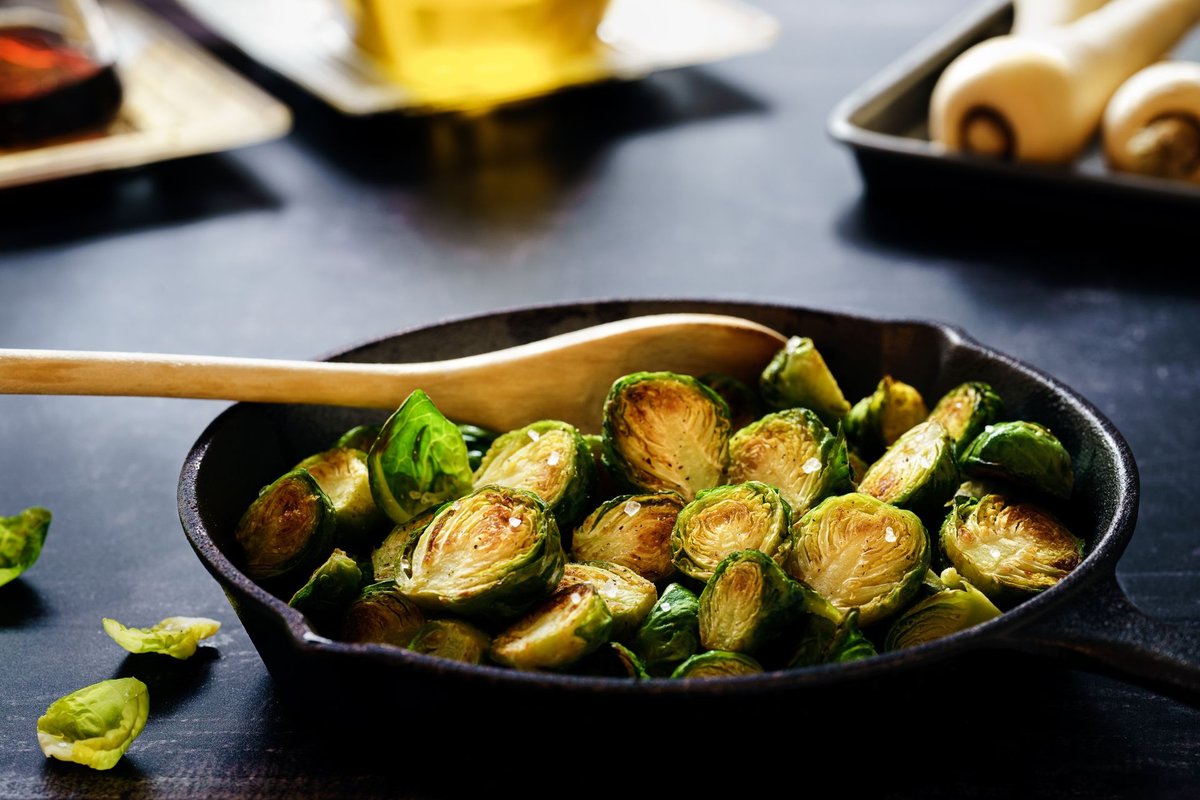
The Nutrition.gov roasted Brussels sprouts recipe lists 6 cups of Brussels sprouts, 1 tablespoon of vegetable oil, 1/8 teaspoon of salt, 1/8 teaspoon of black pepper and 1 teaspoon of lemon juice.
You need (2 servings): 2 cups Brussels sprouts; 1 teaspoon vegetable oil; a small pinch of salt (one third of 1/8 teaspoon is less than a pinch); a small pinch of black pepper; about 1/3 teaspoon lemon juice, which is a few drops.
- Heat the oven to 400°F. Line a baking sheet with foil or parchment paper.
- Wash and trim the sprouts. Cut large ones in half from top to bottom and leave small ones whole.
- Toss them in a bowl with the oil, salt and pepper and spread them in a single layer on the sheet.
- Roast, stirring once about halfway through, until tender and browned. Drizzle with the lemon juice.
The Nutrition.gov roasted Brussels sprouts recipe roasts them at 400°F for 20 to 30 minutes, stirring once after 10 to 15 minutes, until tender and browned. The Nutrition.gov roasted Brussels sprouts recipe suggests red pepper flakes or Parmesan cheese with the lemon juice.
2. Sautéed cauliflower rice
The Nutrition.gov cauliflower rice recipe is published for 4 servings, with 15 minutes of prep and 10 minutes of cooking. We halved it.
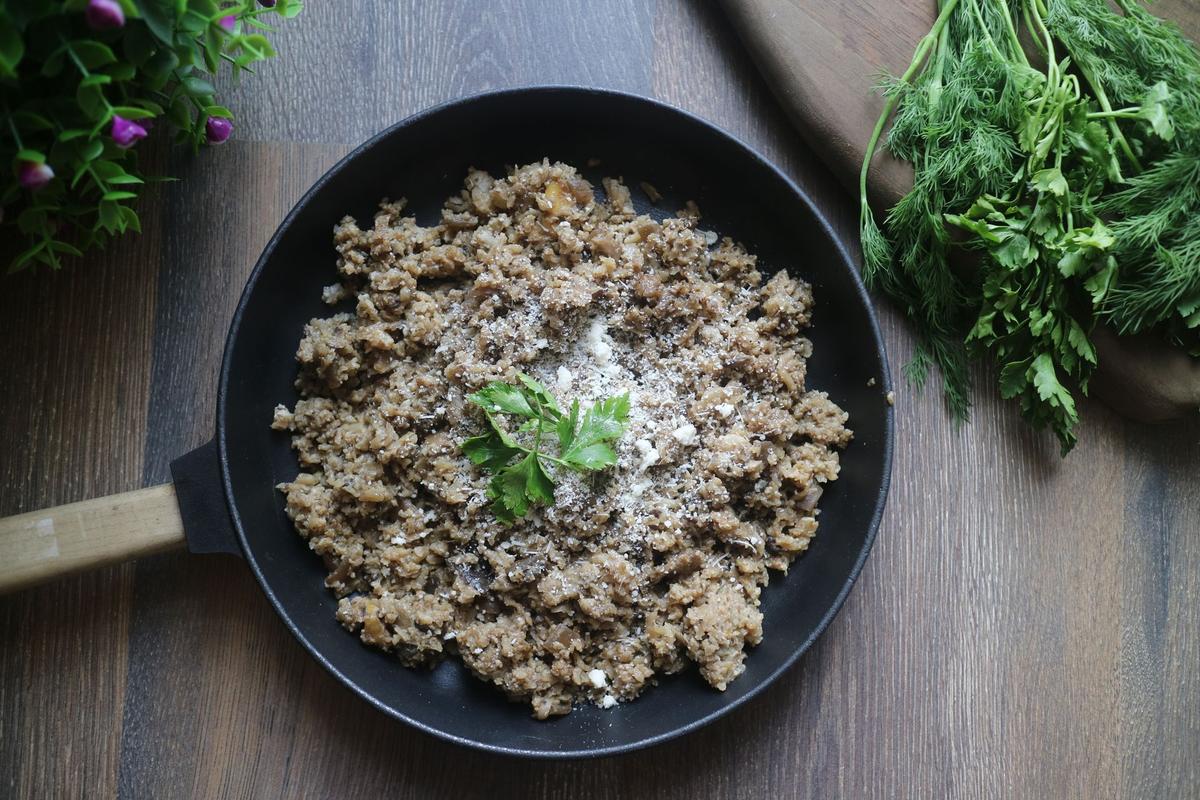
The Nutrition.gov cauliflower rice recipe lists 1 tablespoon of vegetable oil, 1/2 teaspoon of salt and 1/4 teaspoon of black pepper, with lemon juice and parsley optional. That is 1/8 teaspoon of salt per serving, which you can check on the original page.
You need (2 servings): 1 1/2 teaspoons vegetable oil; 1/4 cup diced onion; 1 small clove of garlic, minced (or 1/8 teaspoon garlic powder); half of a medium cauliflower, grated or finely chopped (2 to 2 1/2 cups); 1/4 teaspoon salt; 1/8 teaspoon black pepper; 1 1/2 teaspoons lemon juice and 1 tablespoon chopped parsley, both optional.
- Heat the oil in a skillet over medium heat and cook the onion until soft.
- Add the garlic, cauliflower, salt and pepper and stir until the cauliflower is tender.
- Stir in the lemon juice and sprinkle with parsley. Serve warm.
The Nutrition.gov cauliflower rice recipe says to cook the onion until soft, 3 to 5 minutes, then stir the cauliflower until tender, 3 to 5 minutes. The Nutrition.gov cauliflower rice recipe describes the dish as a side dish or a base for stir-fries, chili or anything you might eat with rice.
The same page adds a tip for the other half of a lemon. The Nutrition.gov cauliflower rice recipe notes that you can freeze extra lemon or lime juice to use later.
3. Baked tofu bites
This is the longest recipe on the page, but most of the time is waiting. The Nutrition.gov baked tofu bites recipe is published for 6 servings of 1 cup each, with 1 hour 20 minutes of prep and 15 minutes of cooking. We took one third for 2 servings.
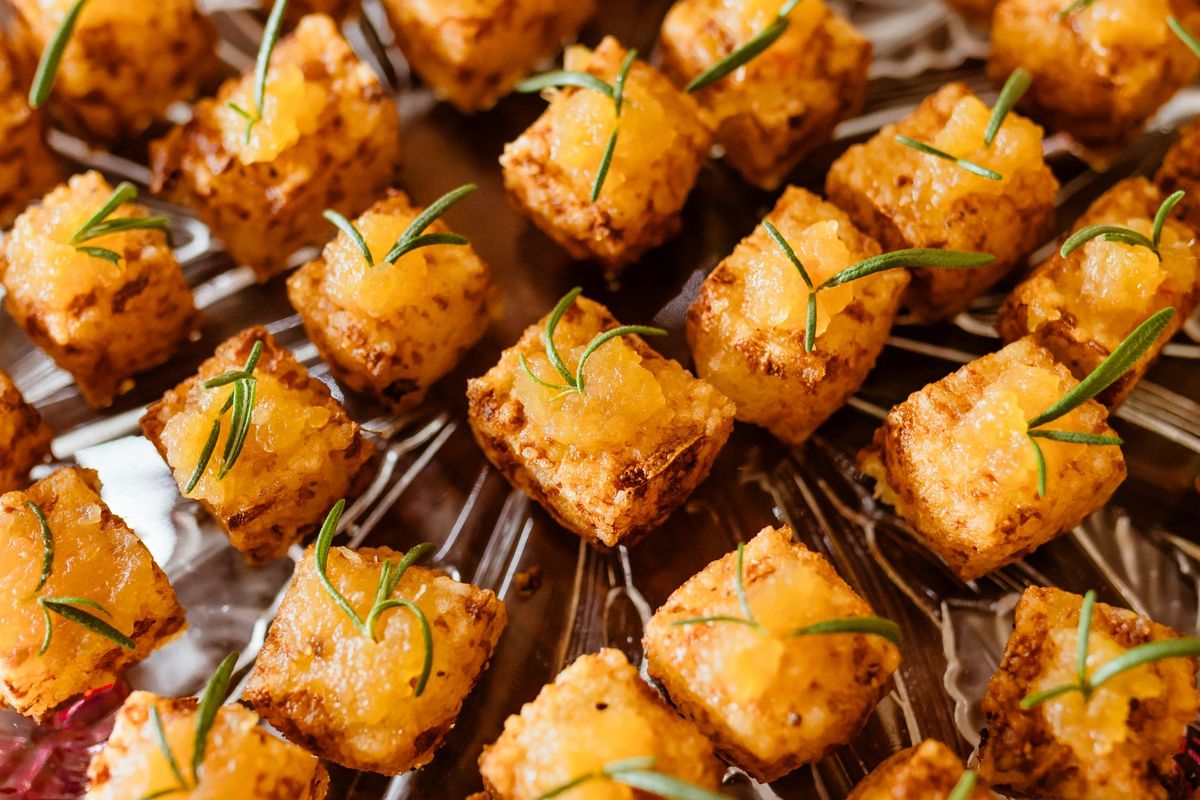
The Nutrition.gov baked tofu bites recipe lists reduced-sodium soy sauce and whole wheat flour. The recipe notes that it contains soy and wheat; if either is a problem for you, skip this one.
You need (2 servings): nonstick cooking spray; 9 ounces firm tofu, rinsed, drained and cut into 1/2-inch cubes; 1 tablespoon hoisin sauce; 1 tablespoon reduced-sodium soy sauce; 1 teaspoon plus 1/4 teaspoon water; 3 tablespoons plus 2 teaspoons whole wheat flour; 1 tablespoon plus 2 teaspoons cornmeal; 1/8 teaspoon ground dry mustard; 1/8 teaspoon garlic powder.
- Mix the hoisin, soy sauce and water in a bag and add the tofu. Turn the bag gently to coat it.
- Marinate in the refrigerator for 1 hour, turning the bag every 15 minutes.
- Heat the oven to 400°F and spray a baking sheet.
- Shake the flour, cornmeal, mustard and garlic powder in a second bag. Lift out the tofu a few cubes at a time, coat them and set them on the sheet in a single layer.
- Bake until lightly crisp, about 15 minutes.
The Nutrition.gov baked tofu bites recipe has you marinate the tofu in the refrigerator for 1 hour at 40°F or lower, turning the bag every 15 minutes. The Nutrition.gov baked tofu bites recipe bakes the tofu at 400°F for 15 minutes, or until lightly crisp. The Nutrition.gov baked tofu bites recipe says to discard any remaining marinade.
4. The 5 A Day salad, halved
This recipe has no cooking at all. The Nutrition.gov 5 A Day Salad recipe is published for 4 servings, with 20 minutes of prep. The Nutrition.gov 5 A Day Salad recipe describes a salad that uses ten different vegetables.
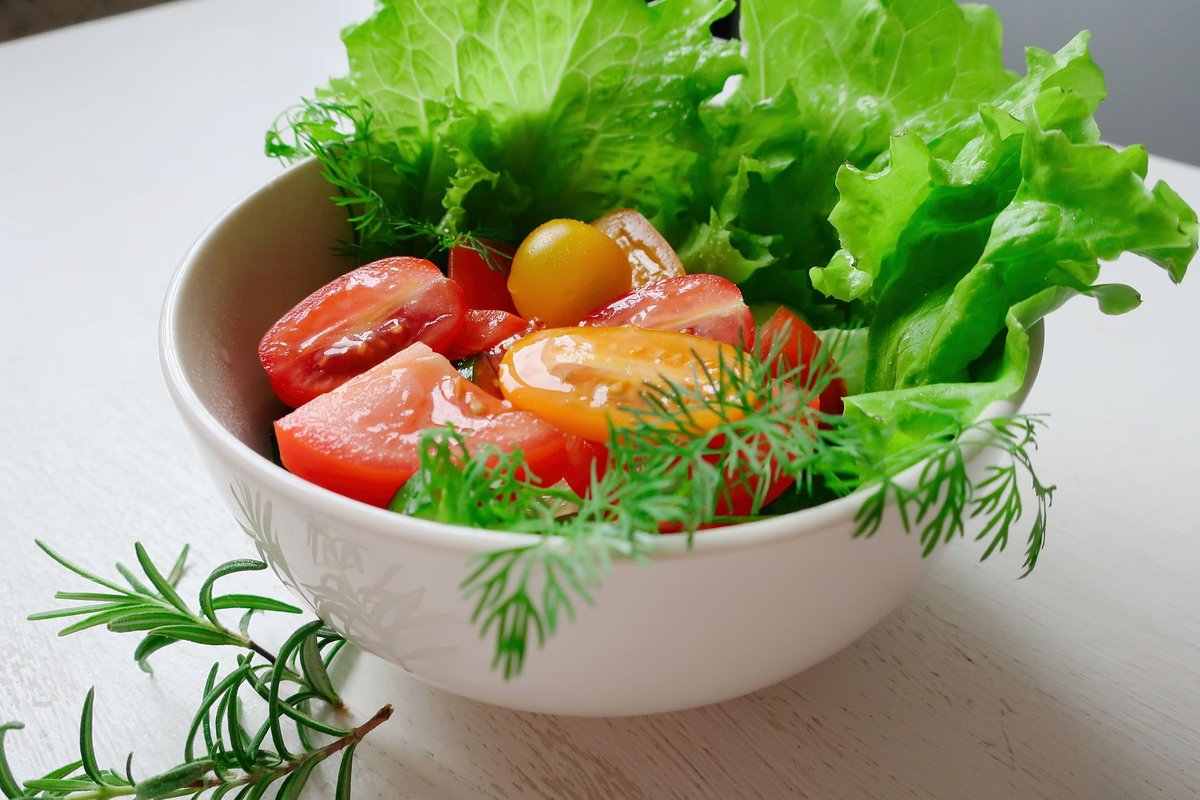
You need (2 servings): 2 cups spinach leaves; 2 cups romaine lettuce; 1 cup chopped bell pepper; 1 cup cherry tomatoes; 1/2 cup chopped broccoli; 1/2 cup chopped cauliflower; 1/2 cup sliced yellow squash; 1/2 cup sliced cucumber; 1 cup chopped carrots; 1/2 cup sliced zucchini; nonfat or low-fat dressing.
That is a lot of vegetables for two, and you may not own ten. Use what you have and keep the half-used ones in the refrigerator; our guide to what to do with half a can, half an onion and other extras shows how.
- Wash all the vegetables and mix them in a large bowl.
- Top with the dressing of your choice.
The Nutrition.gov 5 A Day Salad recipe says to top it with the nonfat or low-fat dressing of your choice.
Where to read more
For the health side of the question, leave our page and go to the sources. The Nutrition.gov Heart Health page links to a guide titled Heart Healthy Grocery Shopping. The Nutrition.gov Heart Health page also links to a National Heart, Lung, and Blood Institute page about the Dietary Approaches to Stop Hypertension (DASH) Eating Plan. Bring what you read to your doctor or dietitian.
Keeping the extra portion
Two of these recipes make a little extra. The USDA Leftovers and Food Safety page says leftovers can be kept in the refrigerator for 3 to 4 days or frozen for 3 to 4 months. The USDA Leftovers and Food Safety page says to divide large amounts of food into shallow containers so they cool quickly. The FoodSafety.gov safe minimum temperature chart gives 165°F for leftovers of any type.
Common mistakes to avoid
- Scaling the salt by eye. Measure the small amounts, and check them against the original page.
- Skipping the label on the soy sauce, hoisin and dressing you buy. The recipe names reduced-sodium soy sauce and low-fat dressing; the label on your bottle is what you actually add.
- Forgetting the marinade time on the tofu. Start it an hour before you want to bake.
- Roasting on a crowded sheet. Spread the sprouts in a single layer.
Your next step
Pick one recipe and read its original page with the plan from your doctor or dietitian next to it. Then write the amounts for two on a card and shop for just those. For more dinners sized for two, see 5 easy dinners for two, and if a recipe in your own binder still feeds six, read how to cut a recipe down to two servings. More ideas live in Dinners for One or Two. This page is general information, not medical advice: ask your doctor or dietitian what fits you.
Sources
- www.nutrition.gov/recipes/roasted-brussels-sprouts
- www.nutrition.gov/recipes/sauteed-cauliflower-rice
- www.nutrition.gov/recipes/baked-tofu-bites
- www.nutrition.gov/recipes/5-day-salad
- www.nutrition.gov/topics/diet-and-health-conditions/heart-health
- www.fsis.usda.gov/food-safety/safe-food-handling-and-preparation/food-safety-basics/leftovers-and-food-safety
- www.foodsafety.gov/food-safety-charts/safe-minimum-internal-temperatures