Thanksgiving Dinner for Two: A Small Menu That Works
By Small Table Kitchen · Updated 2026-11-16
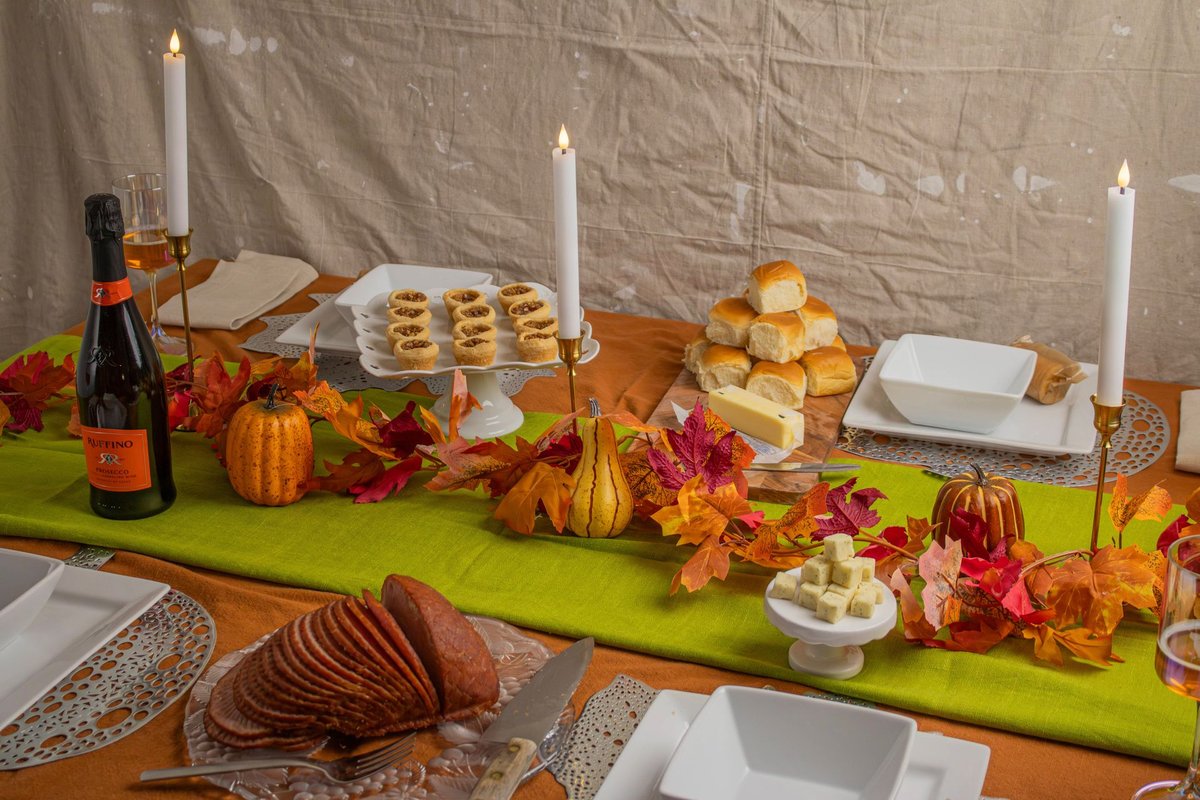
A turkey sized for twelve leaves two people with a fridge full of leftovers and a week of the same sandwich. If your Thanksgiving table used to be full and now has two chairs, the day can still feel like Thanksgiving without the pile of food you will not finish. This guide gives you a small menu in order: a turkey breast sized for two, a cranberry sauce made in one pot, sides you can pick from, a timeline for the day, and a plan for the extra turkey.
The turkey rules come from federal food-safety pages we name along the way, and the cranberry sauce comes from a US government recipe page, linked in the sources at the bottom. Our own part is the arithmetic and the order of the day. We have not cooked this menu in our own kitchen, so use a food thermometer and check each original page before you start.
The menu at a glance
Five dishes is plenty for two plates. The turkey and the cranberry sauce are written out on this page. The sides and the dessert already have their own guides, so we point to them instead of repeating the steps.
- Roast turkey breast: rules and timing below, with leftovers for two more dinners.
- Cranberry sauce: a half batch, with the amounts below.
- Roasted Brussels sprouts and sautéed cauliflower rice: both in our heart healthy recipes for two guide.
- Parmesan peas and berry bread pudding: both in our easy recipes for seniors guide.
The turkey: buy a breast, not a bird
A whole bird is for a crowd. A turkey breast is the smaller cut, and it has its own line on the roasting timetable. Three numbers decide what to buy and when to start.
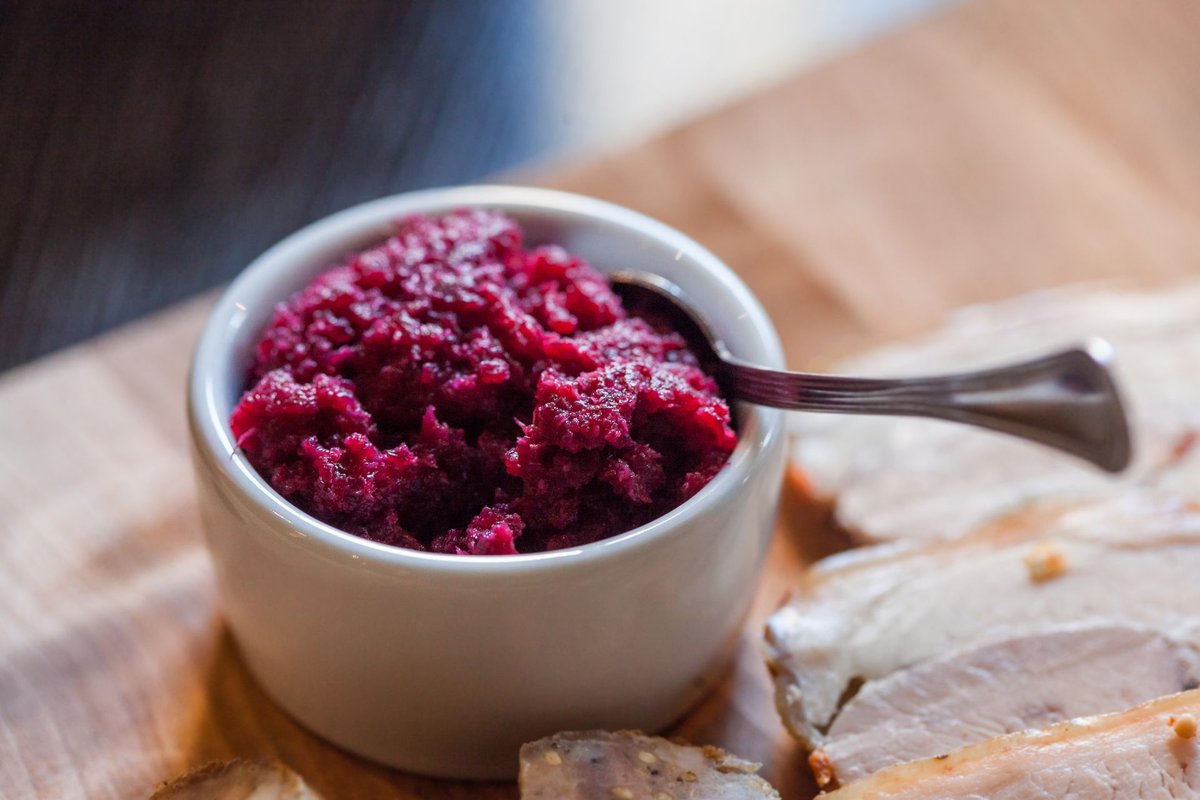
How big, how long, how hot
The USDA Let's Talk Turkey roasting guide says to allow 1 pound of turkey per person. The USDA roasting guide's timetable, written for a 325°F oven, lists 1½ to 3¼ hours for an unstuffed turkey breast of 4 to 8 pounds. The USDA roasting guide says its times are approximate and that you should always use a food thermometer to check the internal temperature.
At 1 pound per person, two people need about 2 pounds. The smallest breast on that timetable is 4 pounds, so plan on about 2 pounds of extra turkey. That is the point of the plan: the extra becomes a second and third dinner, not a surprise at the back of the fridge.
Thawing a frozen breast
A frozen breast needs days, not hours. The USDA roasting guide lists 1 to 3 days of thawing in a refrigerator at 40°F or below for a turkey of 4 to 12 pounds. For refrigerator thawing, the USDA roasting guide says to keep the turkey in its original wrapper on a tray or pan to catch any juices that may leak. If you forgot to thaw it, the USDA roasting guide says it is safe to cook a turkey from the frozen state, and that it takes at least 50 percent longer than a fully thawed turkey.
Roasting steps
- Heat the oven to 325°F. Set the breast on a rack in a shallow roasting pan.
- If your thermometer is oven-safe, put it in the thickest part of the breast at the start. If not, check near the end.
- Start checking earlier than the clock says, because the times are approximate and a small breast may finish near the shorter one.
- Take the breast out when the thickest part reads 165°F.
- Let it stand 20 minutes, then carve.
The FoodSafety.gov safe minimum temperature chart lists 165°F for poultry, including breasts. The USDA roasting guide says that, for quality, the turkey should stand for 20 minutes before carving.
What about stuffing?
The USDA roasting guide does not recommend stuffing a turkey, for optimum safety, and recommends cooking stuffing outside the bird in a casserole. The USDA roasting guide says stuffing must reach a safe minimum internal temperature of 165°F. For two plates, you can skip stuffing and serve the sides in the menu above.
Cranberry sauce for two
This sauce is made from the pantry: dried cranberries, water, sugar and cornstarch. The Nutrition.gov cranberry wojapi recipe lists a yield of 5. We halved it, which should give 2 to 3 small servings, enough for two plates.
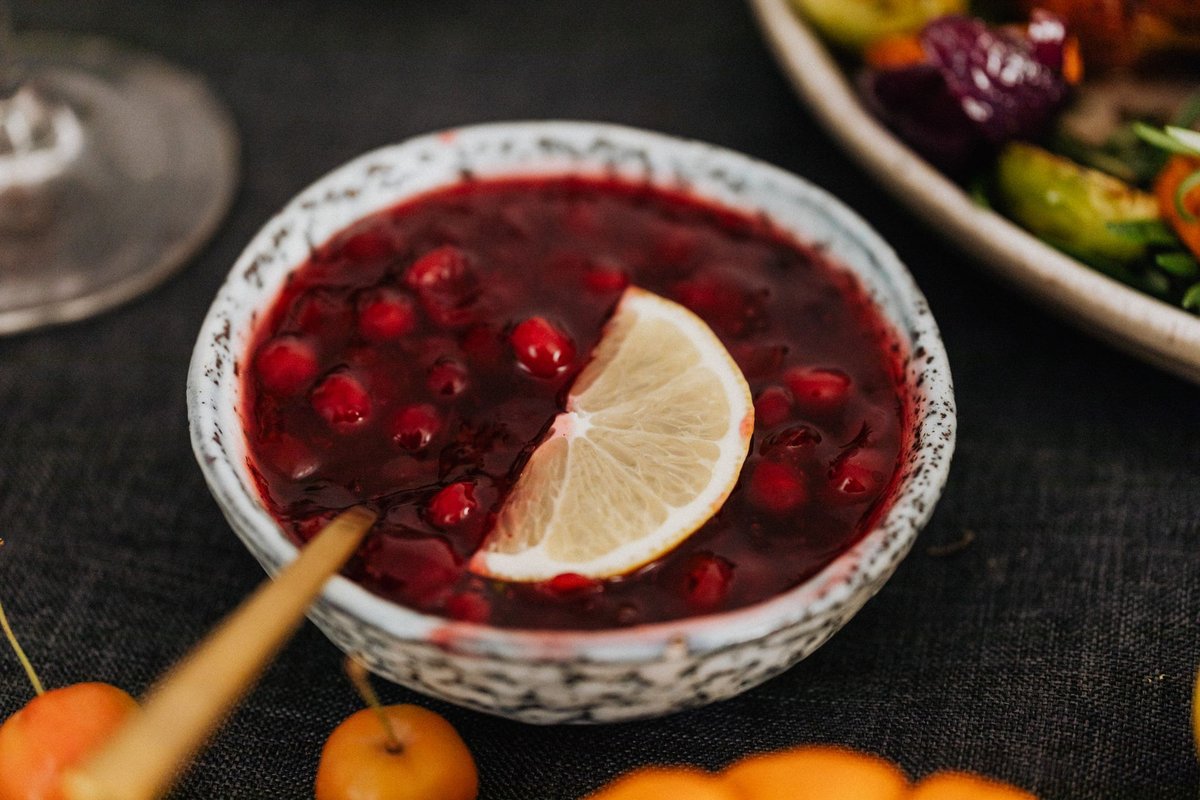
The Nutrition.gov cranberry wojapi recipe lists 1 cup of dried cranberries, 2 cups of water, 4 tablespoons of sugar, and 2 tablespoons of cornstarch mixed with 3/4 cup of water. Half of each is below.
You need (half batch): 1/2 cup dried cranberries; 1 cup water; 2 tablespoons sugar; 1 tablespoon cornstarch, stirred into 6 tablespoons water.
- Stir the cornstarch into its 6 tablespoons of water until smooth.
- Put the cranberries, the 1 cup of water, the sugar and the cornstarch mixture in a saucepan and bring to a boil.
- Turn the heat down and simmer until the sauce is thickened and the cranberries are plumped.
- Serve warm or at room temperature beside the turkey.
The Nutrition.gov cranberry wojapi recipe says to bring the mixture to a boil, then reduce the heat and simmer until it is thickened and the cranberries are plumped. We have not cooked the halved version, so watch the pot and stop when it looks thick.
Sides and dessert, with the oven in mind
The turkey takes the oven at 325°F. The sides take other heat, so order matters more than recipes.
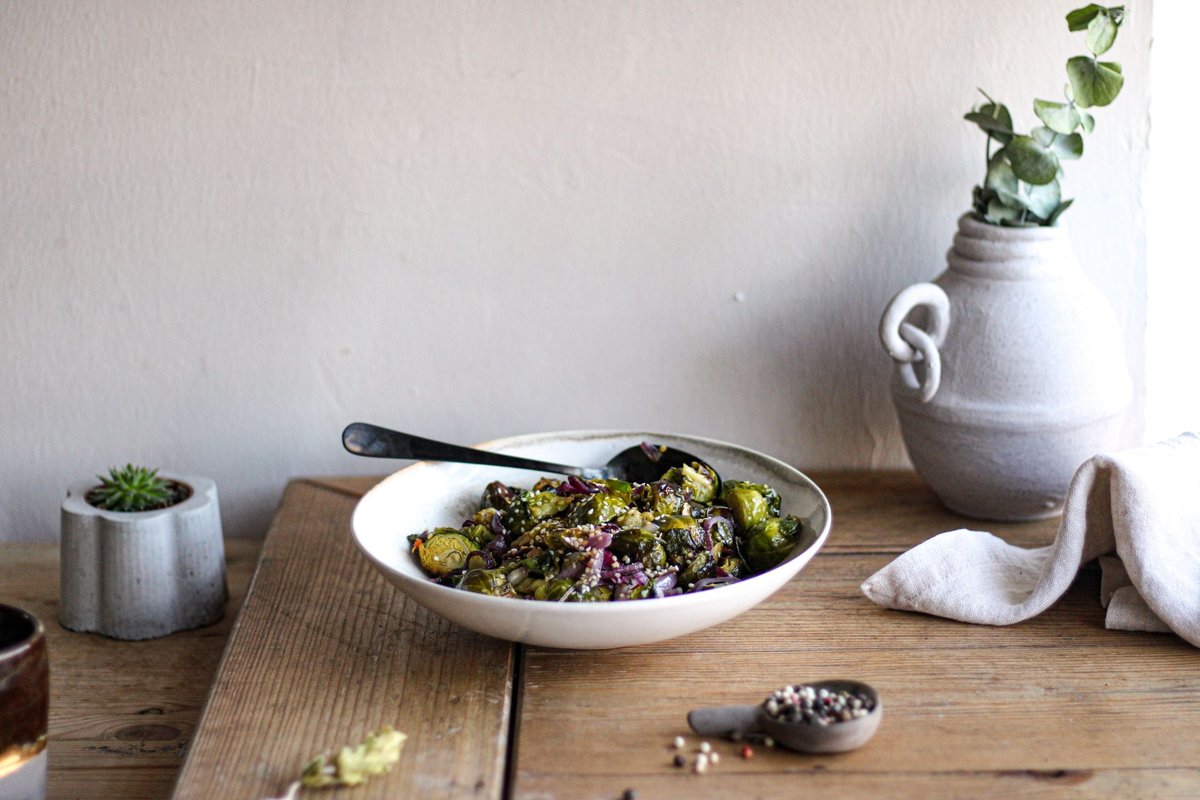
- The Nutrition.gov roasted Brussels sprouts recipe calls for a 400°F oven and roasting for 20 to 30 minutes. Start them once the turkey is out and standing.
- The Nutrition.gov sautéed cauliflower rice recipe lists 15 minutes of prep and 10 minutes of cooking in a skillet or saucepan.
- The Nutrition.gov parmesan peas recipe lists 5 minutes of prep and 10 minutes of cooking in a skillet.
- The Nutrition.gov berry bread pudding recipe is published for 2 servings and is refrigerated overnight. That makes it a day-before dish that needs no oven.
Pick two vegetable sides, not all three. A small table does not need every dish.
The day, in order
| When | What to do |
|---|---|
| 3 days before | Move a frozen breast to the refrigerator on a tray |
| Day before | Make the berry bread pudding; buy the cranberries and the vegetables |
| Morning | Heat the oven to 325°F and start the breast |
| Last hour | Make the cranberry sauce on the stove; start checking the temperature |
| Turkey out | Let it stand 20 minutes; raise the oven for the sprouts |
| After dinner | Put leftovers in shallow containers within 2 hours |
Leftovers for two more dinners
The USDA roasting guide says to discard any turkey, stuffing and gravy left out at room temperature longer than 2 hours, or 1 hour in temperatures above 90°F. The USDA roasting guide says to divide leftovers into smaller portions and refrigerate or freeze them in covered shallow containers for quicker cooling.
| Food | Refrigerator | Freezer |
|---|---|---|
| Cooked turkey, stuffing and gravy | 3 to 4 days | 2 to 6 months |
| Baked pumpkin or pecan pie | 3 to 4 days | 1 to 2 months |
The USDA roasting guide says to use refrigerated turkey, stuffing and gravy within 3 to 4 days. The USDA roasting guide says that if you freeze leftovers, you should use them within 2 to 6 months for best quality. The FoodSafety.gov Cold Food Storage Chart lists 3 to 4 days in the refrigerator and 1 to 2 months in the freezer for pumpkin or pecan pie after baking.
Freezer times are about quality, and refrigerator times are about safety. Reheating matters too. The USDA roasting guide says to reheat turkey to an internal temperature of 165°F, and to add a little broth or water and cover it to keep it moist.
Plan the extra in two halves. Eat one half in the next two days, and freeze the other in single portions with our freezer meals for one method. For a sweet ending that is not a whole pie, see small batch desserts for two. More holiday plans are in Treats, Holidays and Summer.
Common mistakes to avoid
- Buying a turkey by the size of the old table. Buy by the 1 pound per person rule and decide what the extra becomes.
- Thawing on the counter. Count the days back from dinner and use the refrigerator.
- Judging doneness by color or by the clock. Use the thermometer.
- Making five sides. Two will do for two plates.
- Leaving the turkey out while you sit and talk. Set a timer for 2 hours when the plates are served.
Your next step
Look at your freezer and write down one date: the day to move the turkey breast to the refrigerator. Everything else on this page is built backward from it. This page is general information, not medical or dietary advice, so check each original recipe and your own needs before you cook.
Sources
- www.fsis.usda.gov/food-safety/safe-food-handling-and-preparation/poultry/lets-talk-turkey-roasting
- www.foodsafety.gov/food-safety-charts/safe-minimum-internal-temperatures
- www.nutrition.gov/recipes/cranberry-wojapi
- www.nutrition.gov/recipes/roasted-brussels-sprouts
- www.nutrition.gov/recipes/sauteed-cauliflower-rice
- www.nutrition.gov/recipes/parmesan-peas
- www.nutrition.gov/recipes/berry-bread-pudding
- www.foodsafety.gov/food-safety-charts/cold-food-storage-charts